Curating A Milestone: Inside Three Philly Institutions Embracing Complexity for America 250
Unpacking the complexities of American history has never been a simple task, and this rings especially true during the nation’s Semiquincentennial anniversary.
In Philadelphia, where modern democracy was codified 250 years ago, arts and cultural institutions have spent years preparing for an influx of visitors from around the globe in 2026. They’ve developed exhibitions, performances, installations, and public events to engage the projected 1.5 million travelers who look to mark the country’s milestone in a historically significant city. Many of these projects have been produced with Center funding and invite audiences to explore the American experience through nuanced interpretations, leaning into sometimes difficult lines of inquiry.
“Our project is an interrogation of this moment in our country’s history, not a celebration,” says Bill Adair, creative and executive director of ArtPhilly, which launched the multidisciplinary arts festival What Now: 2026 in late May. Adair says the festival programmers asked artists to tackle pressing questions, such as: How much have we progressed as a society since 1776? Where do we go from here? Is there room for hope?
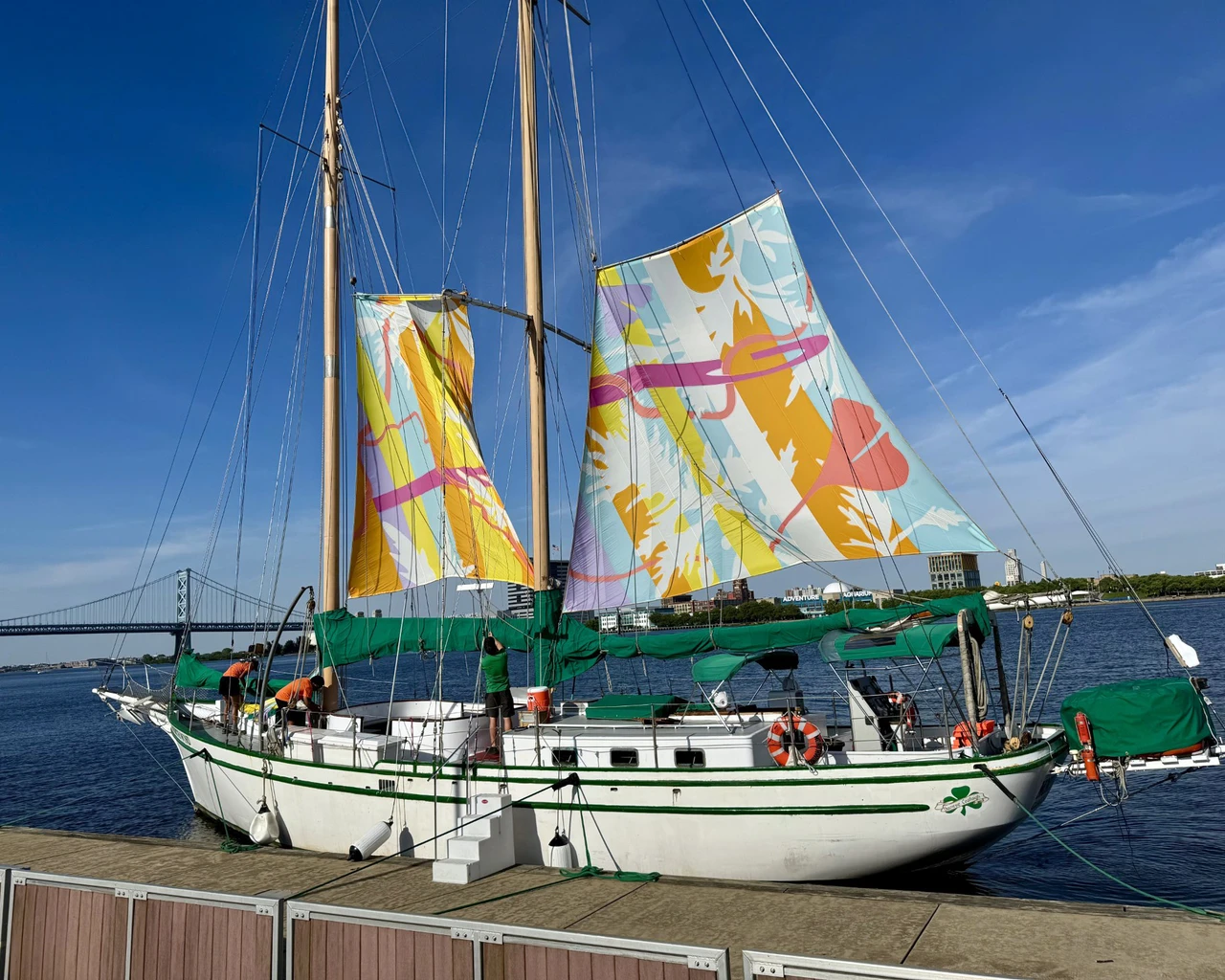
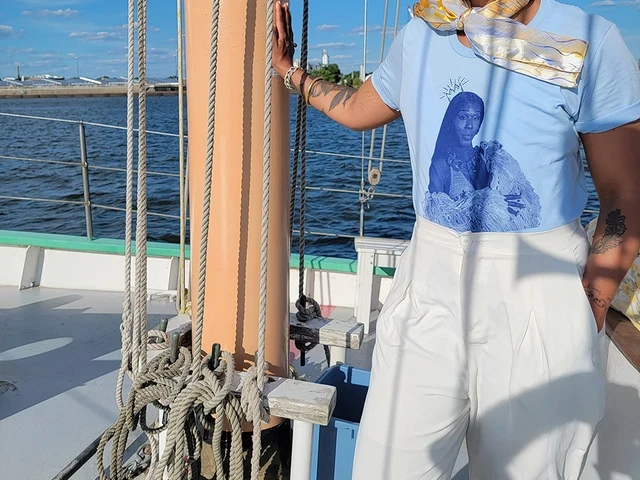
indira allegra, Sail Through This to That, textile installation, 2026, Spruce Street Harbor Park, Philadelphia. Photo by The Pew Center for Arts & Heritage.
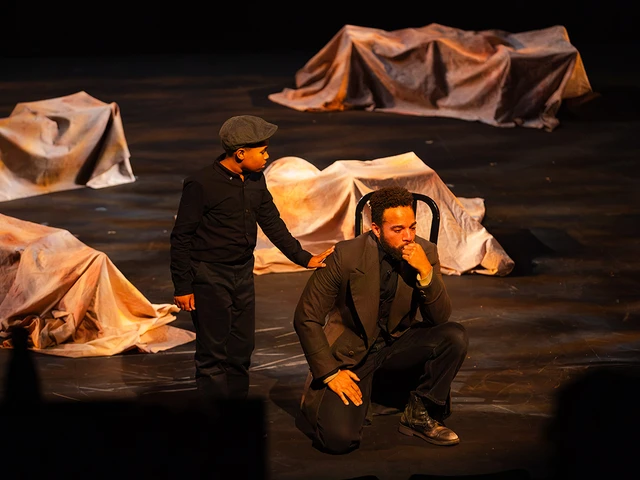
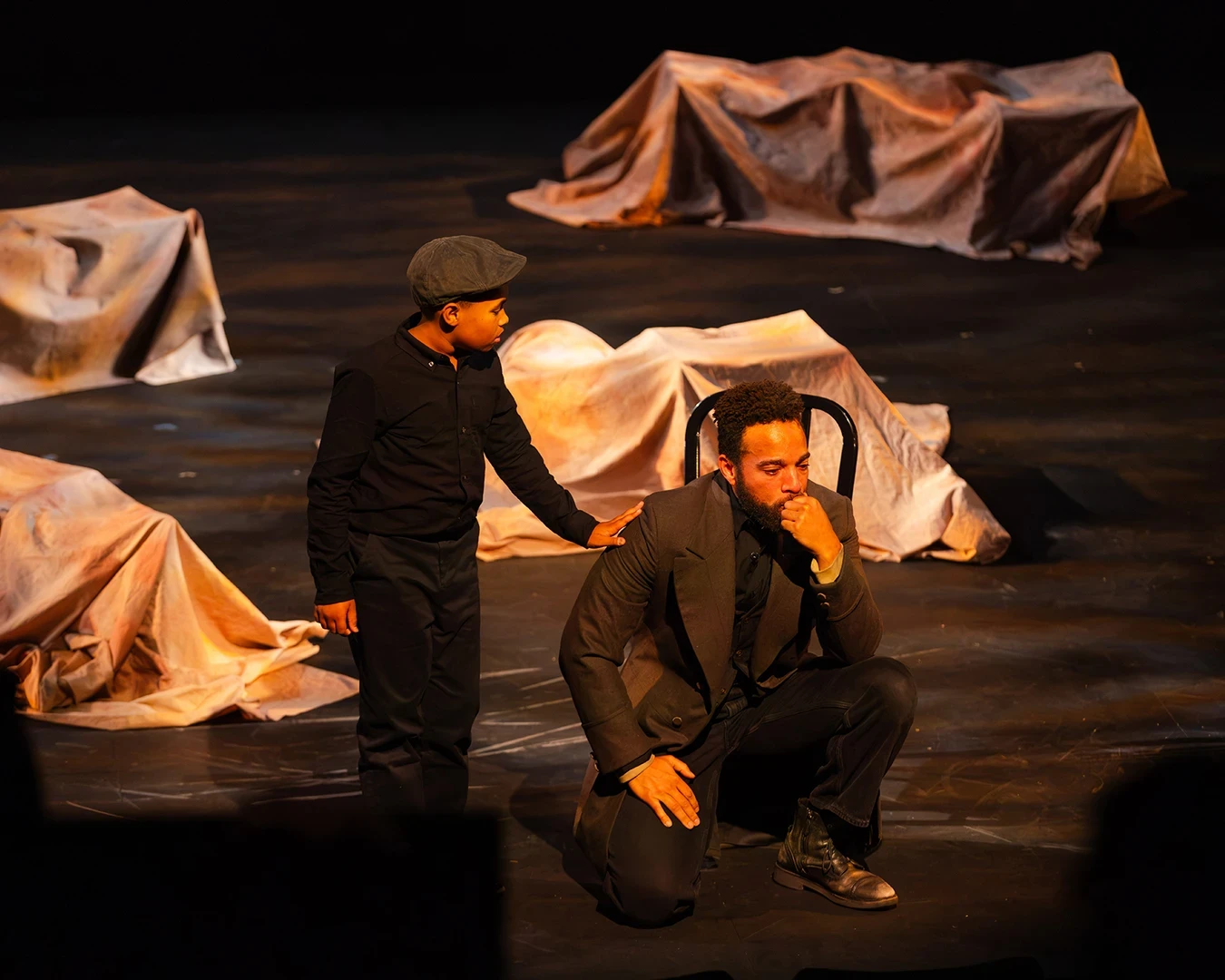
The Center awarded a project grant to support the Delaware River Waterfront Corporation’s collaboration with ArtPhilly on the installation Sail Through This to That (on view at Spruce Street Harbor Park through July 30). The work, created by artist indira allegra, connects the lives of two women and their pursuit of freedom centuries apart from one another. Another Center project grant has supported the development of Basil Biggs—a new work by playwright and scholar Anna Deavere Smith that explores parallels between her family’s history and the nation’s history. "Unearthing comes to mind with these two projects,” says ArtPhilly curatorial and deputy director Tania Isaac (a 2011 Pew Fellow). “Both projects bring our attention to the lives of historically seminal but lesser-known figures and ask us to think about the scale of their long-term impact. These stories represent the immediacy of history and the importance of layered narratives.”
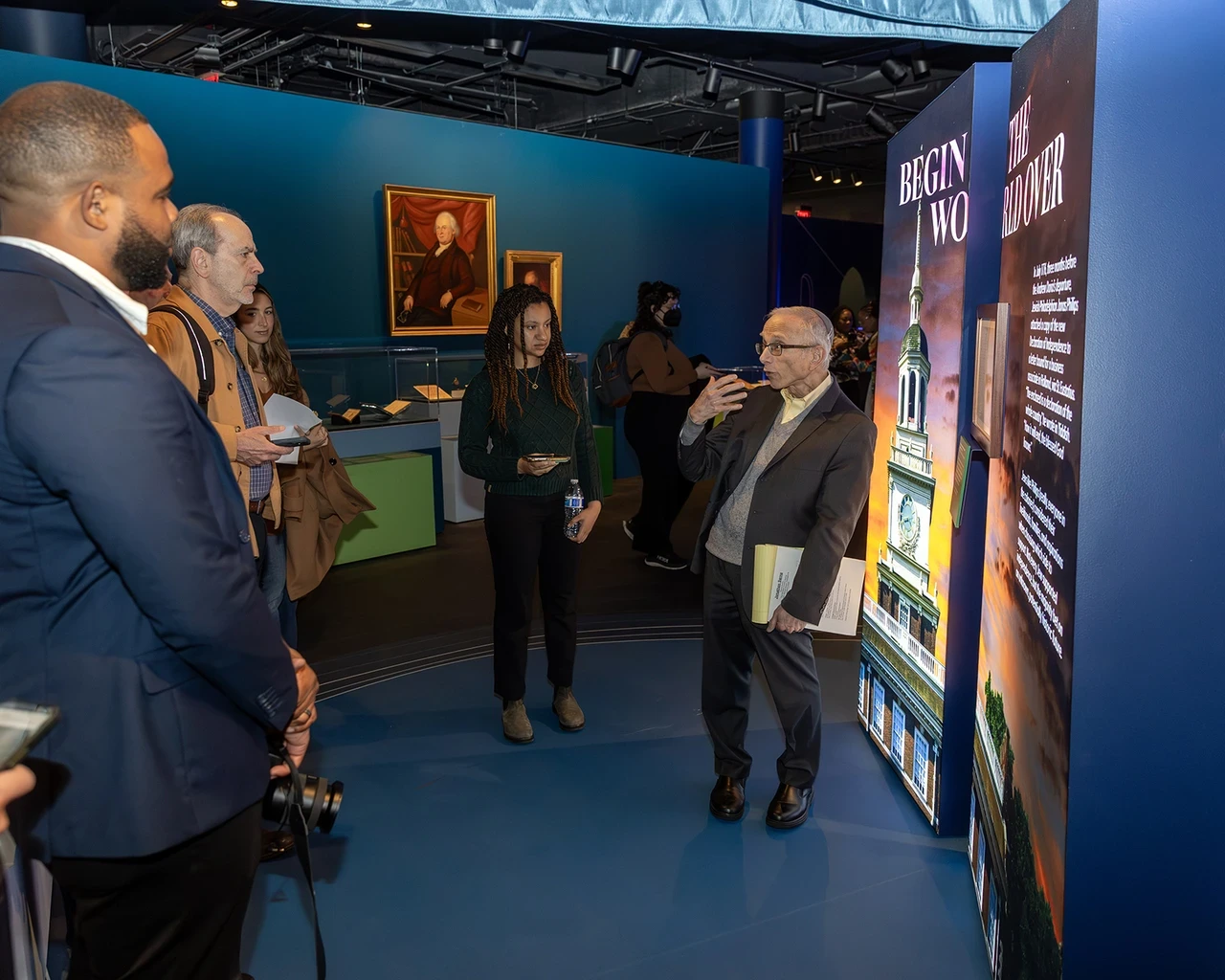
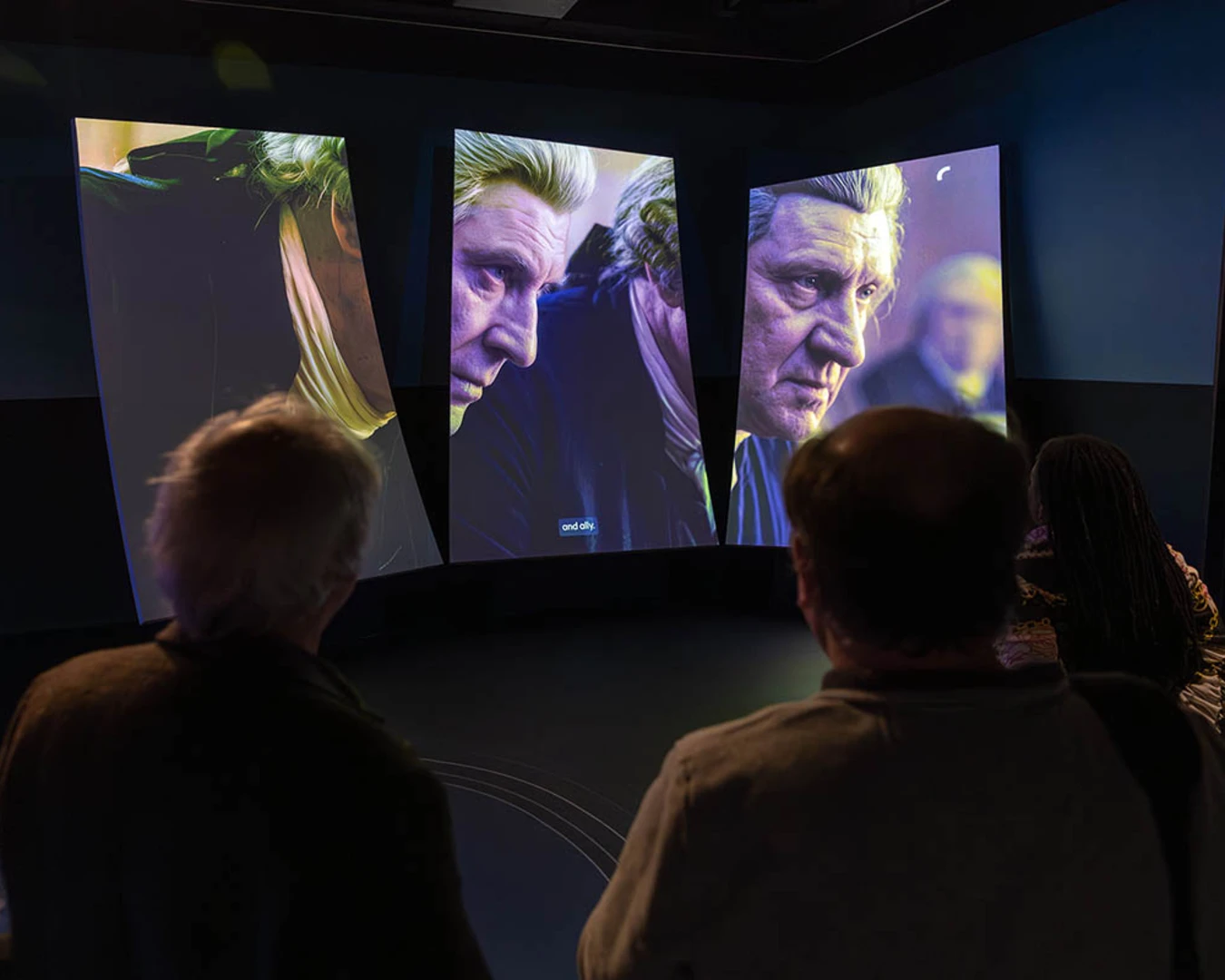
The Weitzman National Museum of American Jewish History also uncovers lesser-known histories in The First Salute. The exhibition (on view through April 2027) spotlights 18th-century Jewish immigrants living in the Caribbean, on the island St. Eustatius, and their support of the colonists’ movement for independence. Josh Perelman, senior advisor for content and strategic projects at the museum, calls it a story of America that is insightful, inspirational, largely unknown, and told in a way that challenges audiences’ assumptions about “who Jews are and where they come from. Cosmopolitan, entrepreneurial, and multilingual, [the Jewish diaspora] moved fluidly—if cautiously—through cultures and kingdoms,” he says. “Not every Jew supported independence, but the majority bet on an unknown, potentially historic future.”
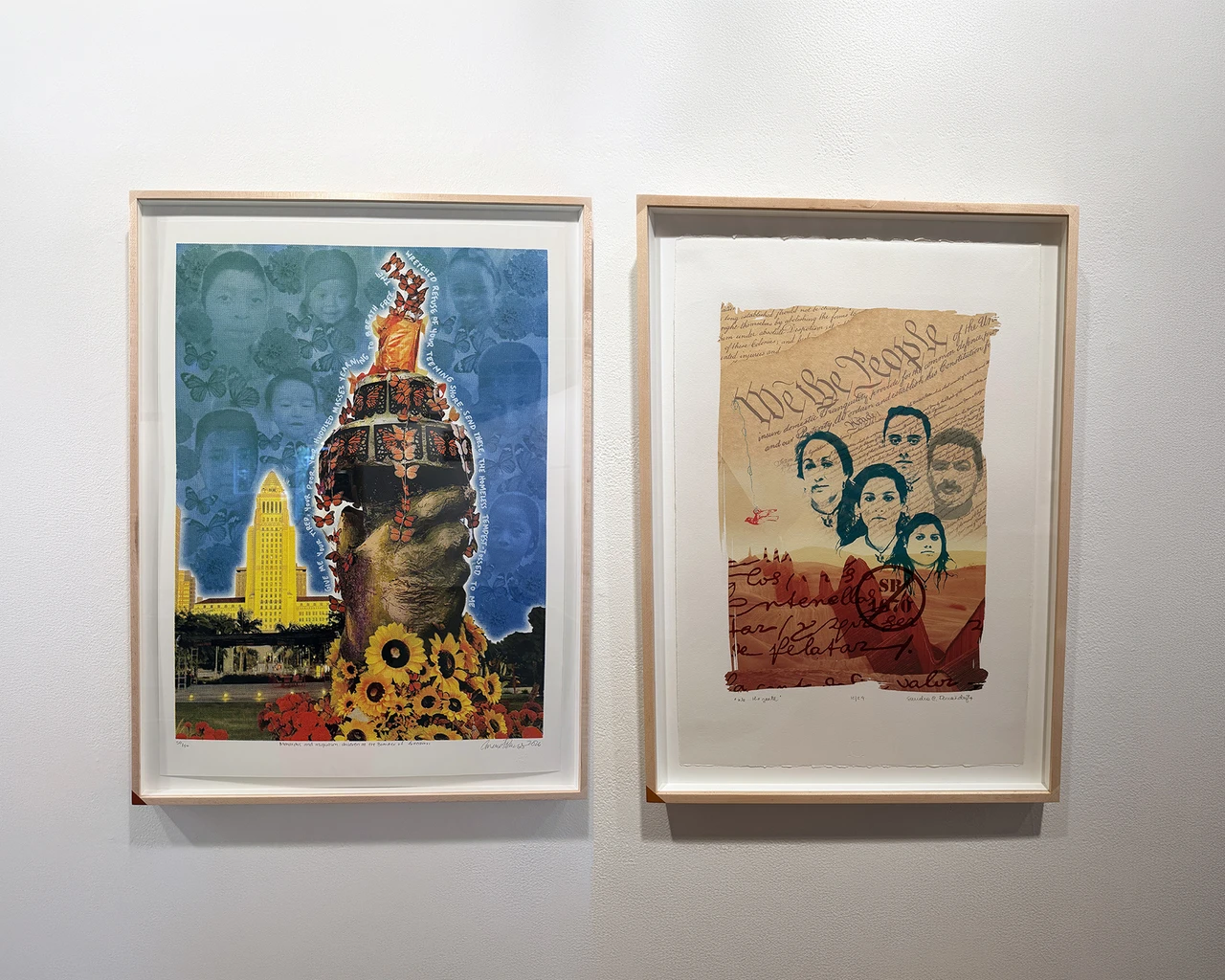
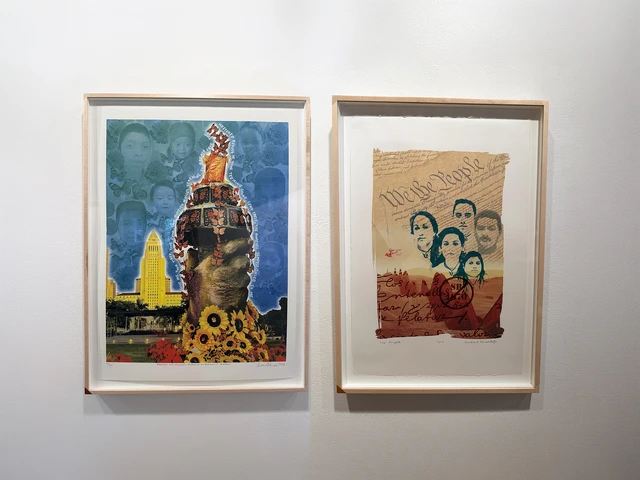
Consuelo Flores, Monarchs and Migration: Children at the Border of Freedom (left), 2026, screenprint, Self Help Graphics & Art, Los Angeles. Sandra Fernández, We...the Gente, 2014, screenprint, Coronado printstudio, Austin. Both prints are featured in America Today, The Print Center, Philadelphia, 2026. Photo by The Pew Center for Arts & Heritage.
At The Print Center, America Today (on view through July 25) takes a contemporary perspective on America’s founding ideals through the lenses of a half dozen small-scale, mission-based printmaking workshops around the US. The work on display addresses social, cultural, and political issues germane to each shop’s audiences and artists—including immigration, equity, freedom of expression, and cultural heritage. The Print Center’s Jensen Bryan Curator Lauren Rosenblum drew inspiration from the printmaking of America’s New Deal era, when artists were also activists and addressed concerns of the day through their work. “Community-grounded printmaking shops that also have long traditions of honoring the most outspoken artists are really continuing in that legacy,” she says.
Rosenblum says the curatorial framework she used for America Today was to “act like a mirror to the current state of affairs.” She explains, “I thought of this as a ripe opportunity to create a contemporary response to this historic moment that talks about our past and our future as a nation. I wanted to create a cacophony of voices, which was the refrain I was thinking about from the get-go. I wanted this to be an exhibition about breadth, about as many folks as we could honor in the space to show the plurality of our nation.”
At the Weitzman, Perelman says the mission was depth: “This meant resisting a simplistic exhibition on ‘Jews and the Revolution’—although for most people this would be new information—and challenging ourselves to identify a truly novel story that could, if successful, both advance the fields of American and American Jewish History as well as assumptions about what an exhibition about the late 18th century ‘should’ look like.”
With almost 40 projects produced across a range of disciplines during the run of the What Now: 2026 festival, ArtPhilly’s approach was artist centered. Isaac says, “My first point of entry as curatorial director was my experience as an artist. Philadelphia is constantly presented comparatively and with what can seem like this sense of aspiring to the sensibility of other creative cultures. I have been curious about articulating the nature, texture and tone of what we make here; of the people who choose to stay here, the reasons why, and the ways in which they work that are difficult to replicate in other places.”
Adair adds that the projects in the festival aim to create conversations with audiences, “not pat or cliched triumphalist narratives. We’re asking our audiences quite directly to bring their curiosity and their openness to the process, and to not expect solutions or resolution.”
This attention to nuance is echoed by Perelman. “History, by definition, is messy,” he says, “and the history of this country, the ideals enshrined in its founding documents, have become highly politicized. Politics recoils at dialogue and demands certainty. Dialogue invites empathy and embraces complexity.”
The First Salute: An Untold Story of the American Revolution at the Weitzman National Museum of American Jewish History, 2026. Photo by Christopher Brown / Shoot From Within Photography.
Reflecting on the intersection of the historic and modern, Rosenblum says, “I think while artists are making prints today, about contemporary times, they are holding with them political history, social history, economic history, lived experience. That is the full breadth of the American experience.”
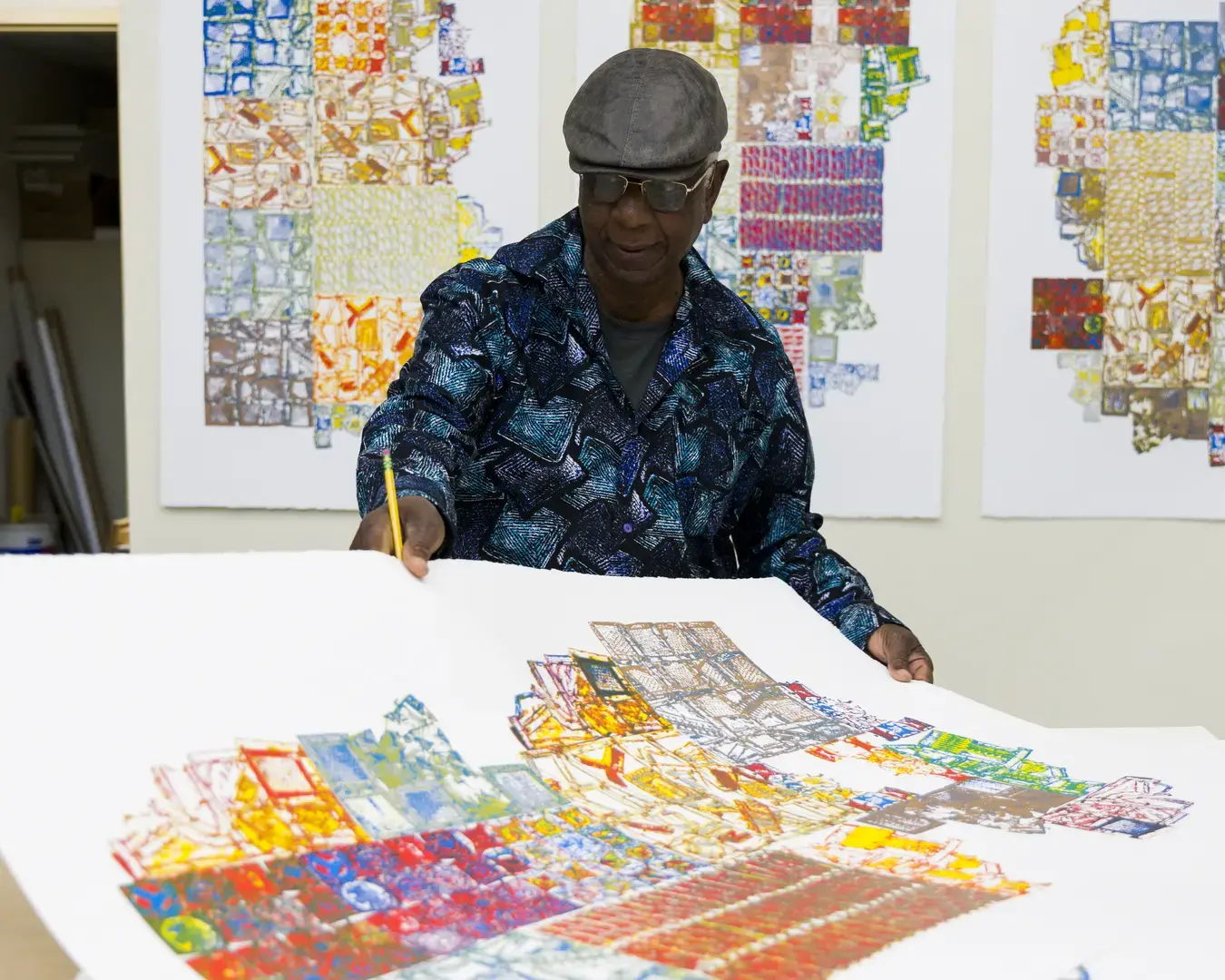
The symbolic weight of Philadelphia on the anniversary is something else that curators we spoke with chose to embrace. Adair notes that “Philadelphia plays a starring role in almost all of our projects—not as the literal 1776 backdrop, but as the context in which these stories are told.” This ranges from a fabric installation by Pew Fellow Odili Donald Odita at Broad Street Love, a sanctuary space for the city’s unhoused people; to filmmaker and Pew Fellow Glenn Holsten’s “cinematic symphony” about the urban landscape “and people-scape” of Philadelphia; to a song cycle by Lauren Talese about the lives of the city’s Black girls across history. “The festival is Philadelphia as subject, provocation, and inspiration,” Adair says.
Rosenblum was excited by the chance to develop America Today at a time when eyes were on the city. “This seemed like a symbolic moment itself. Where people are coming to town with a desire and an openness to think about our political history. And in some ways, I wanted the show to offer a rejoinder, to build out, to complicate, to offer new perspectives on some of the core ideas that have come to represent our nation's values.”
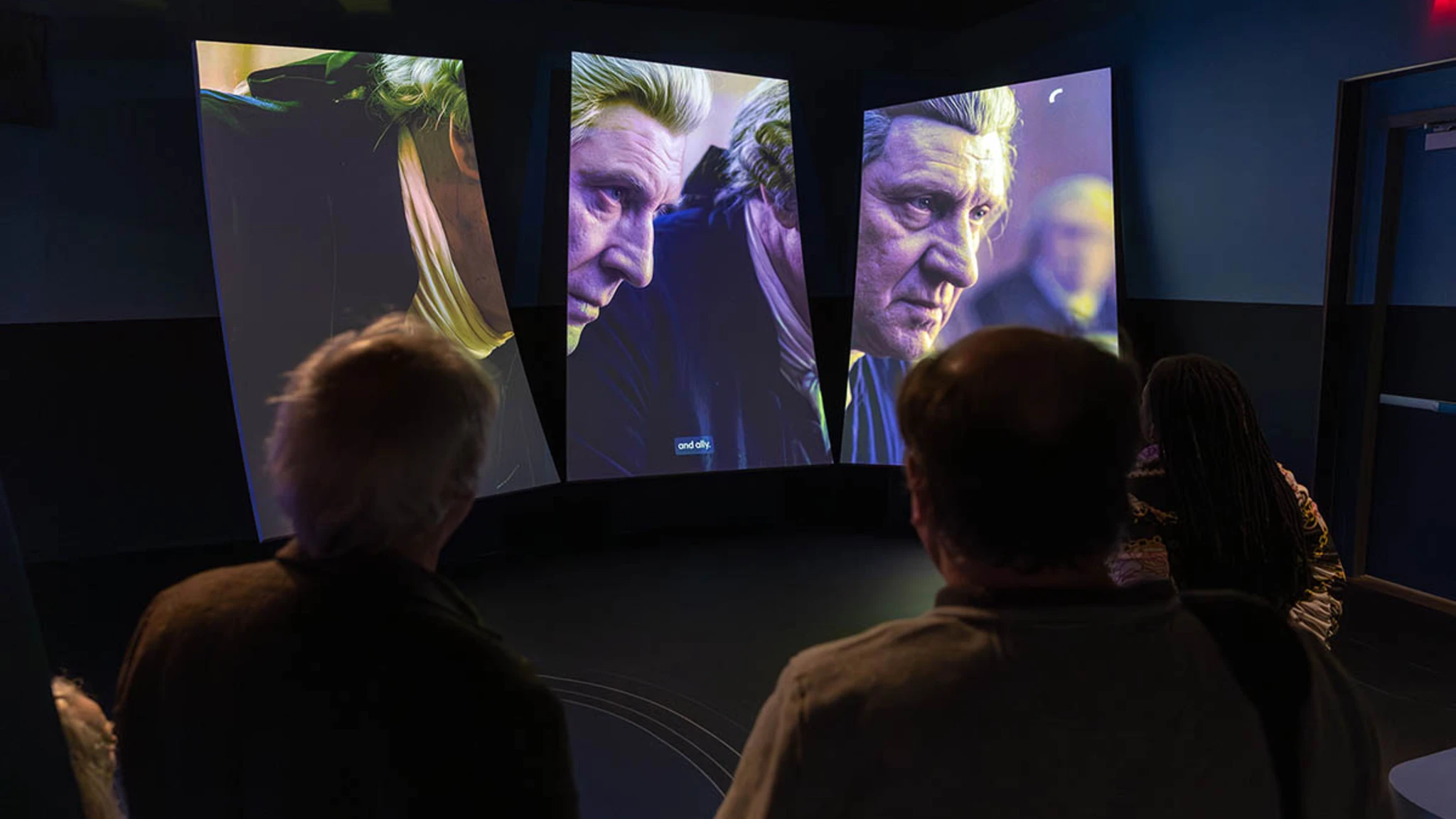
Anna Deavere Smith onstage with cellist Joshua Roman. Smith's play Basil Biggs was produced during ArtPhilly's What Now: 2026 festival, with support from a Center grant. Photo by Diana Walker.
As audiences come to Philadelphia to experience these programs and more, the curators we spoke to are hopeful that their projects will spur moments of introspection, inspiration, and insight. Perelman thinks one impact could be allowing visitors “to briefly step away from the cacophony of noise that reverberates and distracts our minds to ask themselves: What do the ideals enshrined in Independence Hall mean to me?”
Rosenblum hopes that the moment serves as a reminder of history’s ongoing arc, that “this is one stop in a longer story.” These moments of reflection and connection are unique to the arts, she says. “The visual arts, printmaking in particular, allow our visitors a chance to see our everyday experience in the wake of everything that has come before, but also through the eyes of artists. I think that's very potent.”
Isaac points out that arts and heritage work brings perspective, immediacy, and personal connection to the table. “We talk about the relevance of history, but work like this allows us to feel it directly,” she says. “The dates and figures are abstract; this work makes them human and gives us a sense of who we might be in a future historical context.”
Perelman also speaks to the potential impact of the arts but says it remains to be seen how the 250th writ large will serve America. “A national anniversary of this magnitude risks devolving into abstractions: freedom, founding fathers, ‘America the Beautiful,’ et cetera,” he says. “But this is where the arts and heritage community steps in. Our role is to nourish the mind and heart, to engage people both intellectually and emotionally. We can celebrate. We can surprise. We can inspire. We can challenge. And we can hold a contradiction without rushing to resolve it.”