Pew Fellow Zac Manuel on Filmmaking and the Ethics of AI
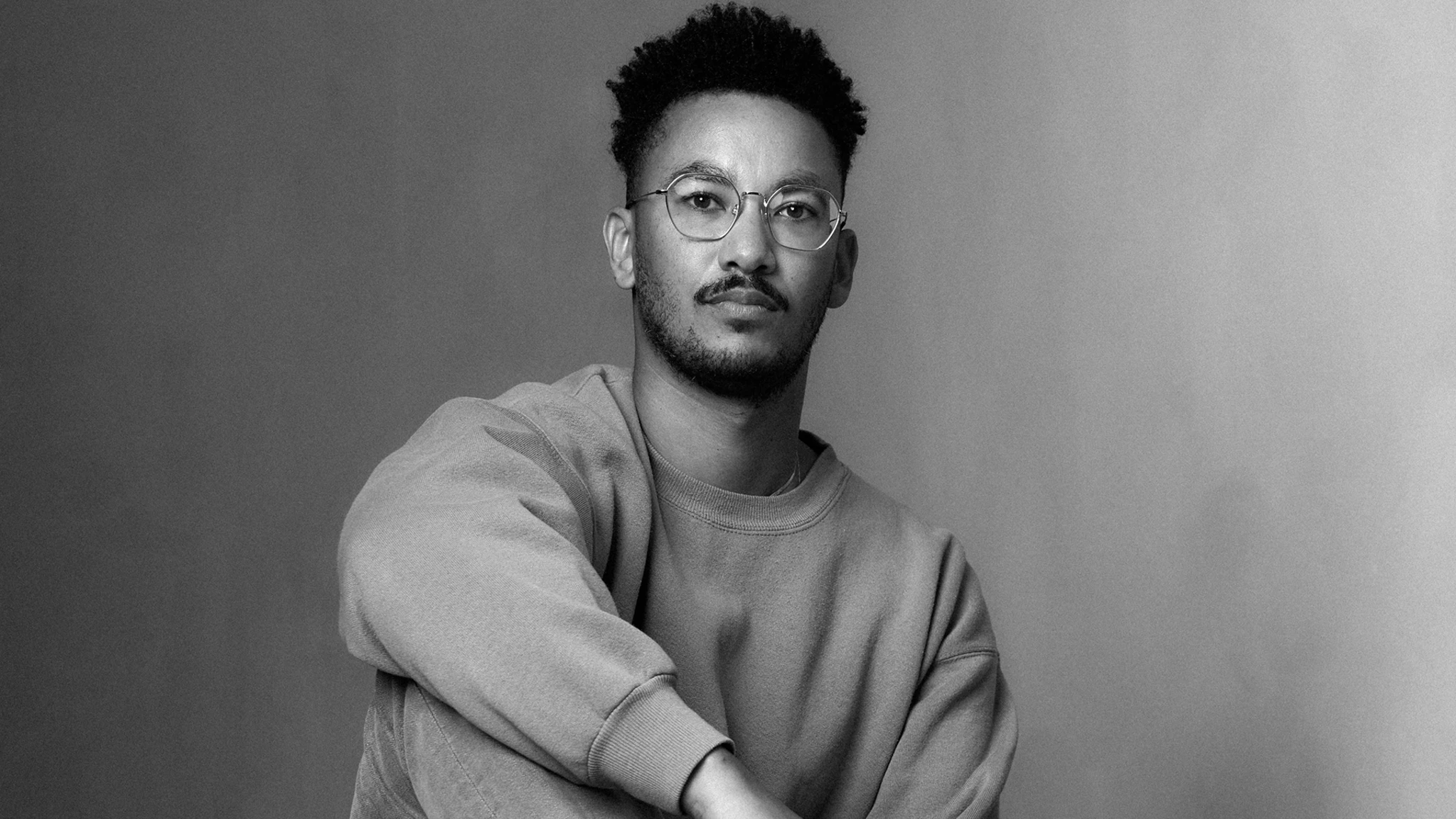
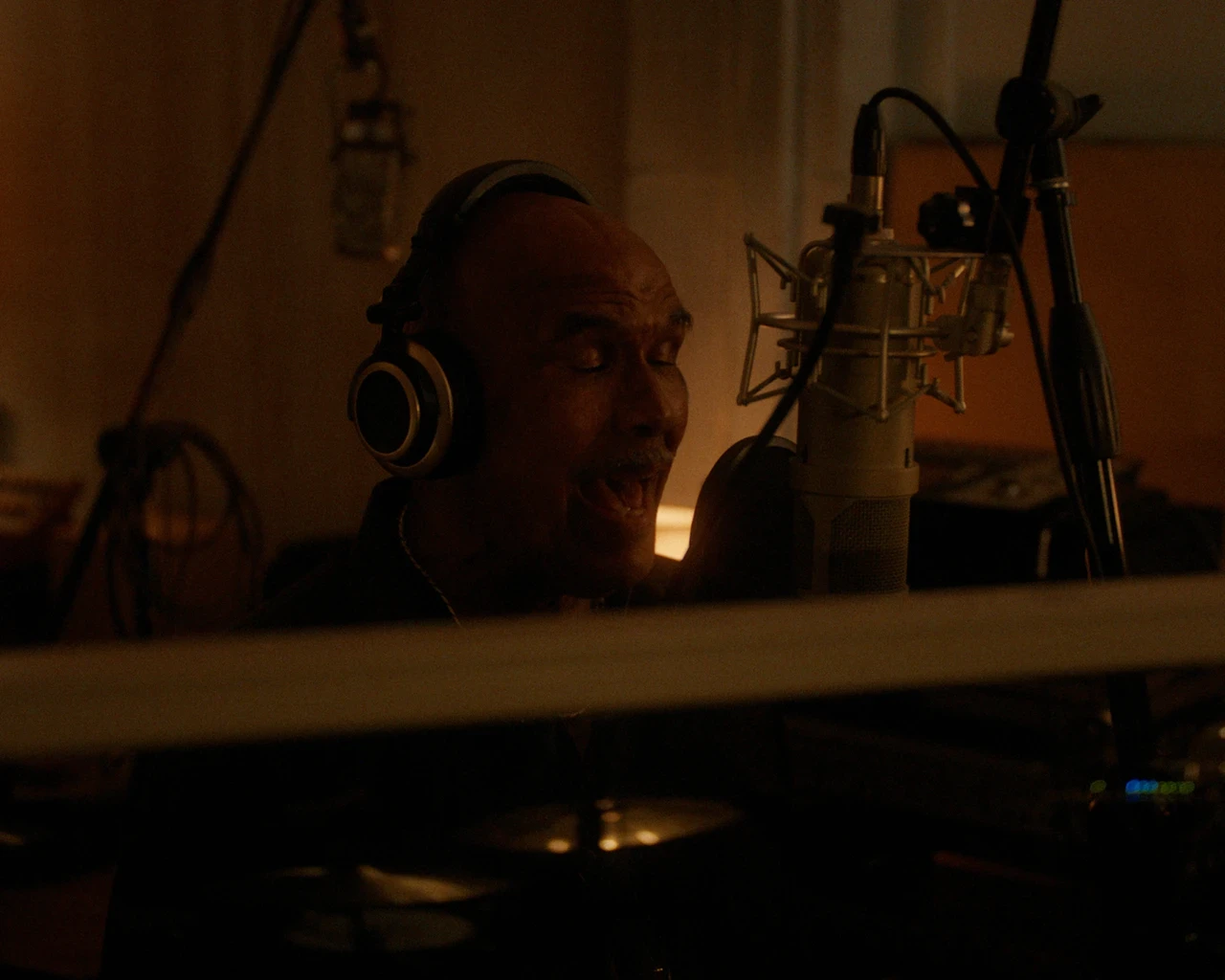
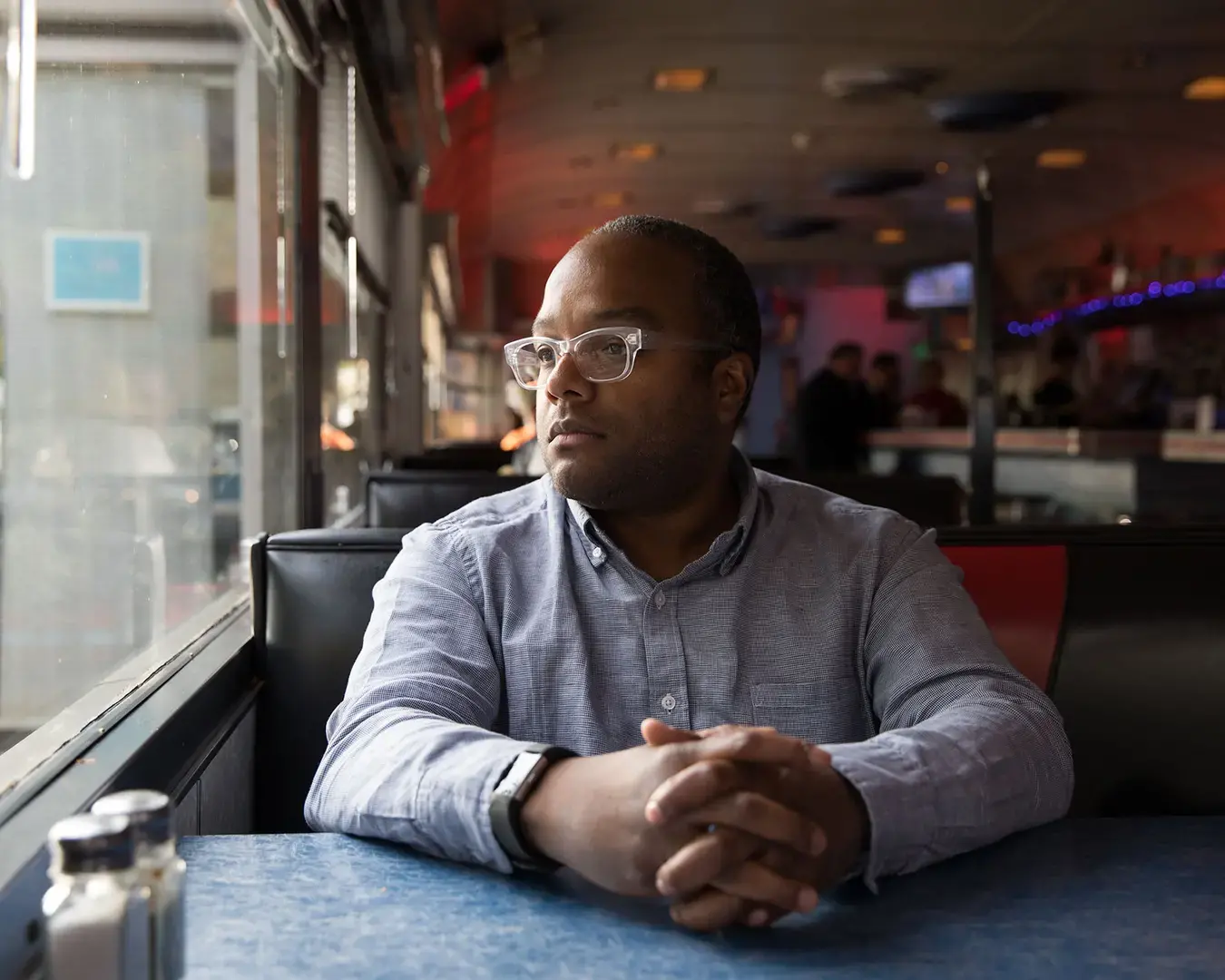
In his forthcoming documentary, The Instrument, Pew Fellow Zac Manuel confronts the cultural quandary of artificial intelligence through his own family’s journey to connect across generations. A filmmaker with a focus on history, legacy, and the Black community, Manuel turns the camera on his father, jazz vocalist Phillip Manuel, as the two begin to explore how AI might reconstruct the voice of Phillip’s father, who was also a singer but whom he never recorded.
Manuel spoke with us about this work-in-progress and reflected on the important influence of music in his practice, from documenting pop star Lil Nas X and the sons of New Orleans rap legends, to chronicling his own family’s musical legacy. He also addressed the “ethically messy” questions posed by the intersection of art and rapidly advancing technology.
Trailer for Zac Manuel's The Instrument.
What is your core motivation as an artist? Has it changed over time?
At the core of my work is a drive to connect threads of history to the present—especially where systems of power have shaped what Black people are allowed to access, preserve, and imagine. Early in my career, I was motivated simply by documenting what I saw around me; I was seeking to understand the world and my place in it by processing the stories of others. But over time, my motivation has shifted toward interrogating the structural limitations placed on Black voices and legacies in fields as varied as music, education, and technology. I’m compelled by the possibility of reshaping those systems, or at the very least inserting Blackness—our history, our imagination, our sound—into spaces that have historically excluded or exploited us.
How has your creative practice evolved over time? What has surprised you in your own work?
Over the past decade, my creative practice has evolved from telling stories about others to more deliberately uncovering and interrogating my own roots. Music has always been a throughline. In my previous feature, Ghetto Children, I followed the sons of New Orleans rap legends as they built their own legacies, and in Lil Nas X: Long Live Montero, I explored how the eponymous pop star found personal truth and confidence through music. In those projects, I was looking outward, tracing the ways Southern Black music shaped identity, culture, and belonging. What has shifted recently is the turn inward. I’ve begun explicitly unearthing my family’s own history with music and performance, confronting how song and voice live within me.
"I didn’t expect that moving closer to myself would actually make my work feel bigger, more alive, and more universal."
That turn has surprised me in its expansiveness. By moving closer to the personal, my practice of storytelling and research has grown outward into more experimental and poetic modalities. Suddenly, I’m connecting my grandfather’s silence to the erasure of Black voices from archives 130 years ago, and exploring the ethics of techno-resurrection through my family’s experimentation with AI, using memory, voice, and genetic inheritances as a part of the data set. The familiar has encouraged me to blend verité, archival, sound design, and speculative approaches in order to tell a story of not just what is, but of what might have been or could be. I didn’t expect that moving closer to myself would actually make my work feel bigger, more alive, and more universal.
Pew Fellow Zac Manuel, film still from The Instrument, 2025. Image courtesy of the artist.
How are you thinking about the rapid advancement of technology and AI as an artist? Is it impacting your practice or how you think about authorship and maintaining your individual artistic voice?
For the most part, advances in technology are welcome. As a documentary maker, smaller cameras with the fidelity of rigs that once broke my back have made filmmaking more accessible and increased the diversity of voices and stories being told. But AI, especially in documentary, is much more fraught. In a form built on truth, the danger is distortion. It’s an existential threat to the medium.
In my own work, I’ve decided to face AI head on. My current film, The Instrument, started as an exploration of “grief science”—the ways new tech mediates loss, delays grief, and makes death no longer finite. Silicon Valley companies are churning out digital avatars of deceased relatives, sometimes with built-in “death dates.” It’s all very Phillip K. Dick: profit-driven, uncanny, and ethically messy. So I turned the moral quandary on my own family. As my father, a jazz singer, feels his voice decline, I began asking if his father’s lost voice could—or should—be resurrected. Maybe, in doing so, I could fill a void of regret?
AI opens new artistic possibilities - resurrection, speculation - but it comes with a great cost. Environmentally, socially, in the unseen labor of others, and culturally, in who the tech reflects and who it erases. I titled the film The Instrument as a provocation. If I want my grandfather to sing again, it costs everyone. And so, I’ve been sitting with the question: What harm am I willing to do in order to heal?
What do you need most to foster your creative process? What are the biggest barriers?
What I need most, and what I struggle with the most, is one and the same: time. It’s slippery, irrecoverable, and precious. My creative process is slow and deliberate. I like to sit with ideas, turn them over and over in my head, and look for unexpected connections. That requires time to reflect, experiment, and sometimes get lost for a while. But in filmmaking, time is constantly pressured by deadlines, budgets, and the pace of production. That tension between the time I need to create and the time the industry allows is both the condition and the barrier of my process.