Pew Fellow Chad E. Taylor on Sacrifice, Success, and His Musical Roots
Drummer Chad E. Taylor first performed on stage at age 15, playing standards alongside his peers and mentors at a Chicago restaurant and jazz club called Sheffield’s. Over the next thirty-plus years, the Pew Fellow—who now resides in Philadelphia—has made more than 3,000 appearances as a sideman and played on more than 150 recordings with ensembles led by Pharoah Sanders, Marc Ribot, Nicole Mitchell, and more.
As a composer and collaborative band leader—in his own ensembles as well as the Chicago Underground, which he co-founded with Jeff Parker and Rob Mazurek—Taylor incorporates contemporary improvisation, folkloric music of Southern Africa, and experimental rock into his take on modern jazz. That aesthetic array is evident on Smoke Shifter, the studio album Taylor released in November of 2025 on Otherly Love Records. The album features five songs recorded with his Philadelphia-based band featuring Jonathan Finlayson on trumpet, Bryan Rogers on tenor saxophone, Victor Vieira-Branco on vibraphone, and Matt Engle on bass.
Taylor took time out of his schedule as a performer and educator—he crisscrosses the state of Pennsylvania regularly to direct the jazz program at the University of Pittsburgh—to answer questions about making space for an array of creative voices in his work, as well as the philosophy behind his practice, and his roots as an artist. He also shared a playlist of the music that moves him, which you can listen to below.
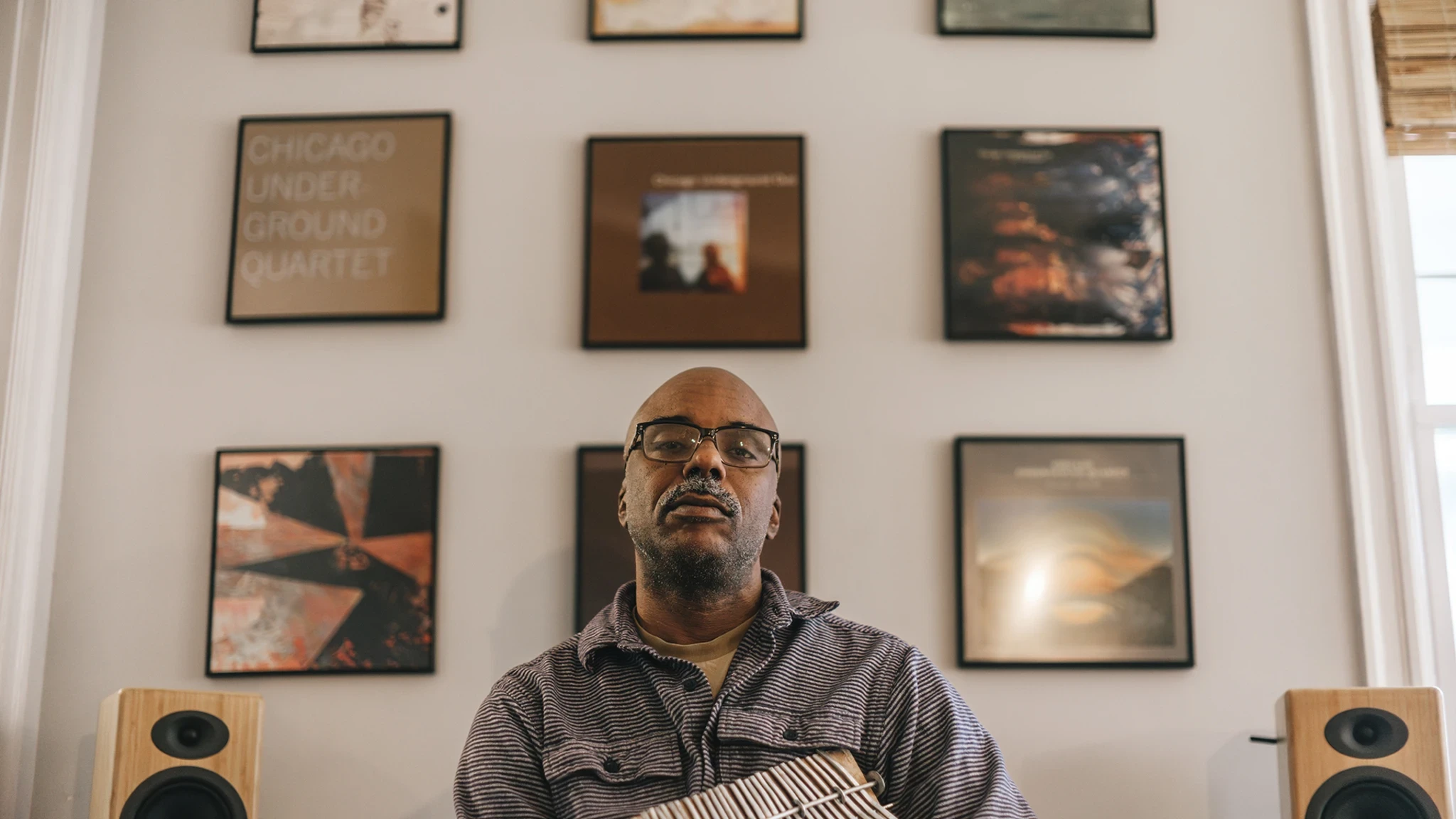
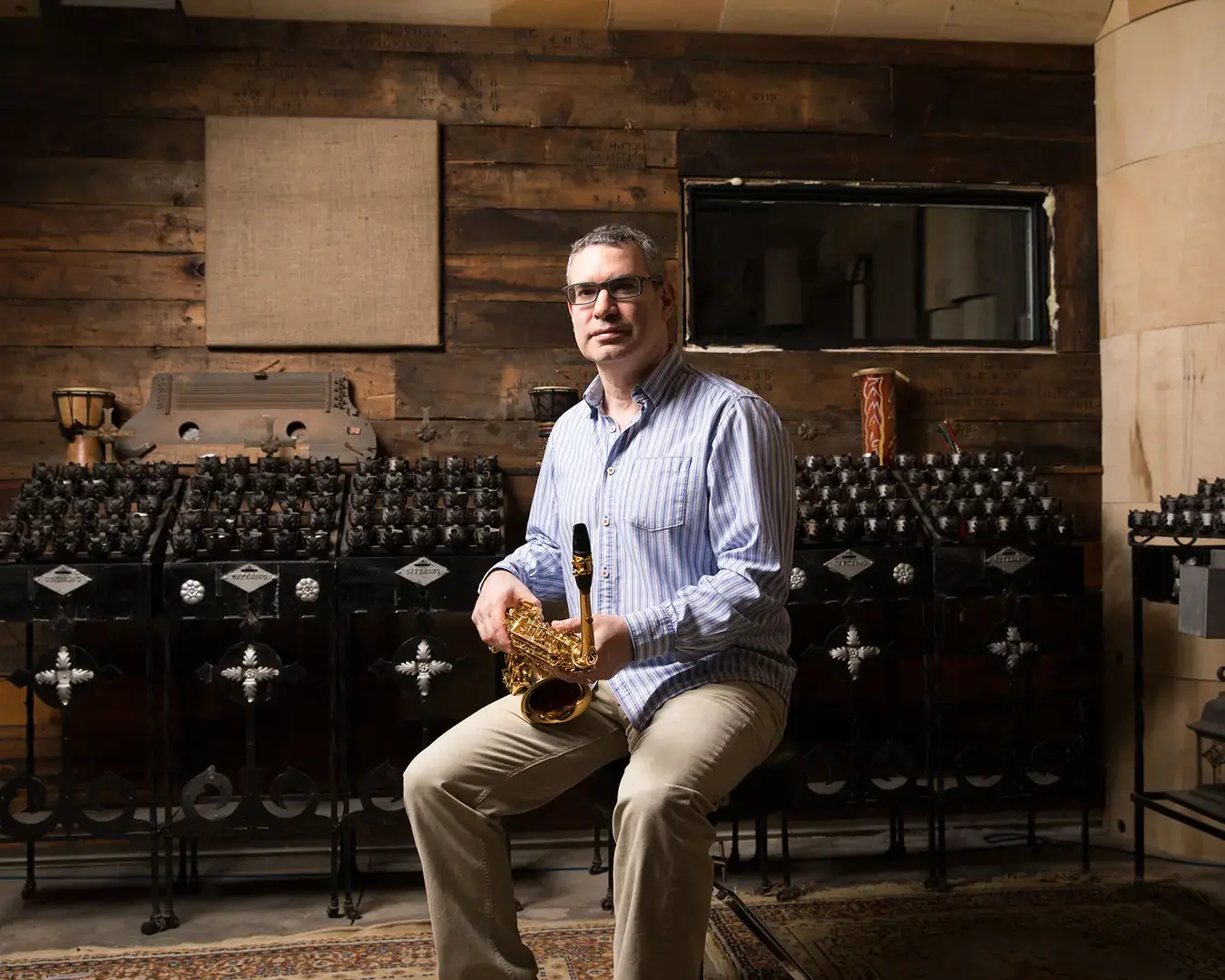
Chad E. Taylor, 2024 Pew Fellow. Photo by David Evan McDowell.
Was there a moment when you began to identify yourself as an artist?
My senior year as a jazz performance major at the New School of Jazz was challenging. The first semester I failed a class simply from a lack of effort. My school counselor was supportive of my effort to graduate and suggested I take an extra course to get some additional credits. He informed me that the class was easy and if I just showed up, I would get an A.
The name of the course was The Artist’s Search for its Soul. The first class, the instructor indeed informed us that the class was easy and that we didn't even have to show up. As long as we turned in the assignments on time and did well on the final exam, we would pass the class. However, he hoped that we would be so intrigued and fascinated by studying the psychology of being an artist that we would come to every class with enthusiasm.
Indeed, the course was fascinating, and I never missed a class. On the last day, our instructor informed us the final exam would only consist of one essay question: “Imagine yourself as a successful artist. (Success being whatever you define as success.) What did you have to give up to obtain it?” I was dumbfounded. It was the hardest question I ever was asked as a young man, and it's the first time I started thinking about myself as an artist. Sometimes I look back at my essay and think about the things I predicted correctly and also think about the things I got completely wrong. Creating art is not just about what you get but about what you give up.
So how did that thought exercise play out in your career? What's a sacrifice you correctly predicted you’d have to make as a growing artist, and what’s something you thought you’d have to give up but were able to maintain?
One sacrifice I correctly predicted was giving up complacency and comfort. For me, being successful as an artist means you have to create your own path. You have to lead and not follow. Often times, that means having people constantly question what you are doing and why you are doing it. This can come from peers, family, friends, and the people you love the most. It can be very isolating and make you feel alone. At the same time, the art you create can also make you feel connected and engaged, not just with your community, but with complete strangers in a way that is incredibly fulfilling. When someone comes up to me and says that my music has changed their life, there is no better feeling than that!
Another sacrifice that I thought I'd have to make in order to be a successful artist is having a family. I thought that having a partner and having kids would be impossible. But I have a very supportive partner and three incredible daughters, and to be quite frank, I couldn't do what I do without them. They constantly inspire me. That's not to say there have not been challenges balancing work and family. It has not been easy. It is something that I am constantly working to improve on.
"Creating art is not just about what you get but about what you give up."
What is your core motivation as an artist? Has it changed over time?
My core motivation as an artist has always been to make people feel things that they aren't used to feeling as a means for spiritual healing. As a young man, what drew me to music was being able to hear and feel things that could not be expressed with words. It was so liberating and healing to me. In my practice I try to make people feel things, both comfortable and uncomfortable, that they might not feel in their daily life.
What are some pieces of music that have made an impact on you in that way as a listener?
Wow, there are so many! I could give you hundreds of compositions, but these are the first that pop in my head:
“The C.O.R.E.” from Art Blakey's Free for All Second movement of Ravel's Piano Concerto in G major “Sama Layuca” from McCoy Tyner's Sama Layuca “Not” from Big Thief’s Two Hands First movement of Augustine Barrios’ La Catedral “Preciso Me Encontrar” from Cartola’s self-titled album “All Night Long” from Junior Kimbrough’s All Night Long “Old Black Mattie” from R.L. Burnside’s Too Bad Jim “Mahororo” from Stella Chiweshe's Kumusha “Don't Smoke in Bed” from Nina Simone’s Little Girl Blue “All My Life” from Ornette Coleman's Science Fiction “Joy” from John Coltrane's Infinity
Listen to Chad E. Taylor's playlist of music that moves him.
You share compositional duties on your new album Smoke Shifter with several members of your quintet, and you’ve said you “gravitate to people who have their own sound and approach.” How are you able to strike that balance between individuality as players and collective cohesion as a group?
It's been my experience that people who have their own sound and approach weren't just born with it. They did a lot of hard work studying the masters and studying music in general, either formally or informally. Having done this, blending their own approach with others is not a big deal. It comes naturally. Another key component is being able to put your ego aside and always putting the music first.
What does being an artist mean to you, versus what people think being an artist looks like?
Whenever I tell someone I'm an artist / musician, one of the first reactions I've gotten is "oh, that sounds like fun!" The biggest misconception I think the general public makes about artists is that what we do is not work. It is work. It is an extreme amount of hard work and focus. There are fun things that I've experienced as an artist, but it doesn't change the fact that I'm constantly working: physically, intellectually, emotionally, and spiritually.