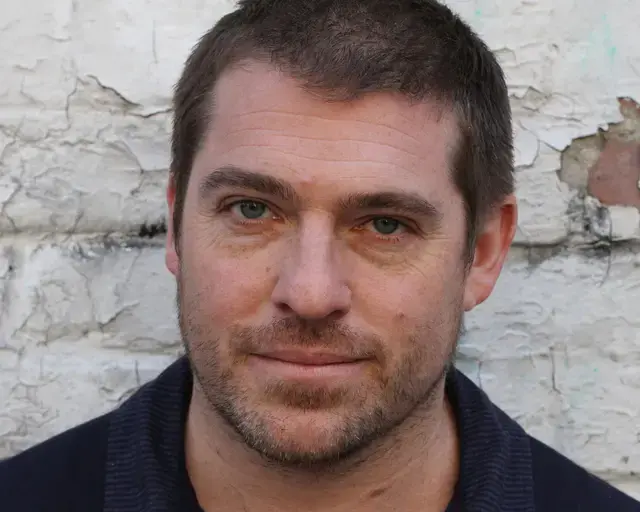
Pigeons on the Grass, Alas: Nato Thompson
"The bracket of the museum or gallery often shifts the lens of a project away from its being toward a traditional mode of representation. It is a shift that I find often in the way of the artists' intent."
What drives cultural practitioners to experiment, discover, and create?
"The bracket of the museum or gallery often shifts the lens of a project away from its being toward a traditional mode of representation. It is a shift that I find often in the way of the artists' intent."
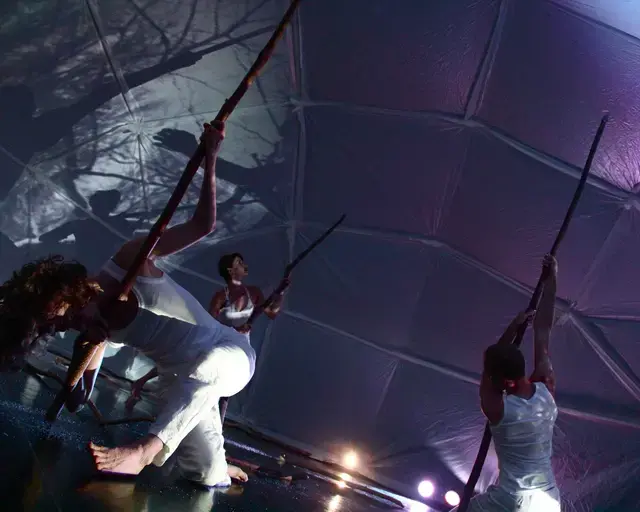
Ain Gordon, the Center's 2011–13 Visiting Artist, spoke with choreographer and director Merián Soto about her Center-supported piece, *SoMoS*.

Toni Shapiro-Phim's portrait of the Brownings, co-founders of the World Music Institute, highlights their pioneering work in the curation of world music and their organization's impact on the field.

Jenny Sabin writes about designing a "Greenhouse for the Future," part of the American Philosophical Society's Center-funded Greenhouse Projects.

Campuzano, a visual artist and 2009 Pew Fellow, spent an entire night in the Center office, with only the staff's belongings for company. He used the experience as inspiration for a new set of drawings.

The third article in the American Impresario series features Wein, pianist, founder of the Newport Jazz and Folk Festivals, the New Orleans Jazz and Heritage Festival, and many others.

"I curate for curious people. I curate for people who love some other field or subject the same way I love art. I curate for those people who need to be won over, but are willing."

Isaac, a 2011 Pew Fellow in dance and choreography, peppered the walls of the Center with blank pages for writing and sharing ideas, in an evolving project called "The Notebook."

The second article in the American Impresario series features Harrington, founder and artistic director of the Kronos Quartet. Through almost four decades of work, Harrington has had a major impact on contemporary music.

"This has remained a core part of my curatorial agenda: Giving voice and space to marginalized points of view."