Pew Fellow & Filmmaker Tshay on the Stories Images Tell and the Necessity of Mystery
Multimedia artist and Pew Fellow Tshay uses filmmaking and photography to explore the full range of humanity and the Black experience, from grief and loss to delight and sensuality.
Tshay’s documentary Proof looks at Jamaican funerary traditions and family photographs; her new short Tell Me When You Get Home, which premieres at the 2026 South by Southwest Film & TV Festival, uses animation to depict an encounter between a 15-year-old girl and the spirit of her late mother.
Tshay spoke with us about the power and potential of images to document the present, connect us to the past, and imagine the future.
What is your core motivation as an artist? How has it changed over time?
I’m motivated by culture. I’m interested in stories and beliefs, customs and traditions, and how history is mediated through images. I was recently scanning through a box of photographs with my older cousin. As we looked at each photo, I felt all these questions rise to the surface. “Who took this and when? What was on their mind as they pressed the shutter button? What’s their understanding of their own experience, and how does it inform mine?”
In my short documentary, Proof, I’m thinking about how photographs are used at the time of death, when people are looking back to remember a loved one. Images are artifacts of kinship, proof that we relate to one another in a specific way. I’m fascinated by images because they feel so tied to the creation of the self, which is maybe just another way of saying the creation of a narrative.
A lot of my work is personal and deals with my lived experience. As I continue to make work, I’m less interested in creating a one-to-one representation of human life and more interested in fantasy, exaggeration, and even abstraction.
"Images are artifacts of kinship, proof that we relate to one another in a specific way."
Was there a moment when you began to identify yourself as an artist?
When I first picked up a camera and decided to make a movie, I was motivated by cultural organizing that I witnessed during the Black Lives Matter movement. I was learning a lot, organizing with my peers, and I had a lot of opinions about the way the world needed to change. I started making work to be a part of the change, to course-correct for years of subjugation and domination. I really wanted to prove that Black women did not deserve the undue harm of a racist system. But culturally, at least here in the US, I think Black people have proven this already. We’ve done so much gesturing to show that we are not the savages they think we are, and I’m not sure the gestures have amounted to much in terms of our material reality. Representation is fraught.
And yet, I really have to resist the urge to have my work stand for something, represent something, or claim something. As an artist, I’m observing my world, using very specific tools, and trying to sort out how I feel about my observations—what I want to magnify or minimize, what needs to be rendered in what way. I’m so grateful that art exists and that it can help us come to conclusions about our reality. It has helped me express myself and think about myself. That feels like plenty.
What do you need most to foster your creative process? What are the biggest barriers?
Time! That precious, ever-elusive construct that is slipping through my fingers. There has to be a period of solo time in my practice where thoughts and ideas emerge. To foster my process, I need to be able to lose track of time and even lose track of space. When I completely forget how much time has passed or even where I am, when my grip on reality is loosened a bit, that’s when I know I’m onto something.
The biggest barrier, of course, is balancing all the other stuff. Making rent, stocking the fridge, caring for loved ones. These are all things that make the practice possible, so there has to be time for that too.
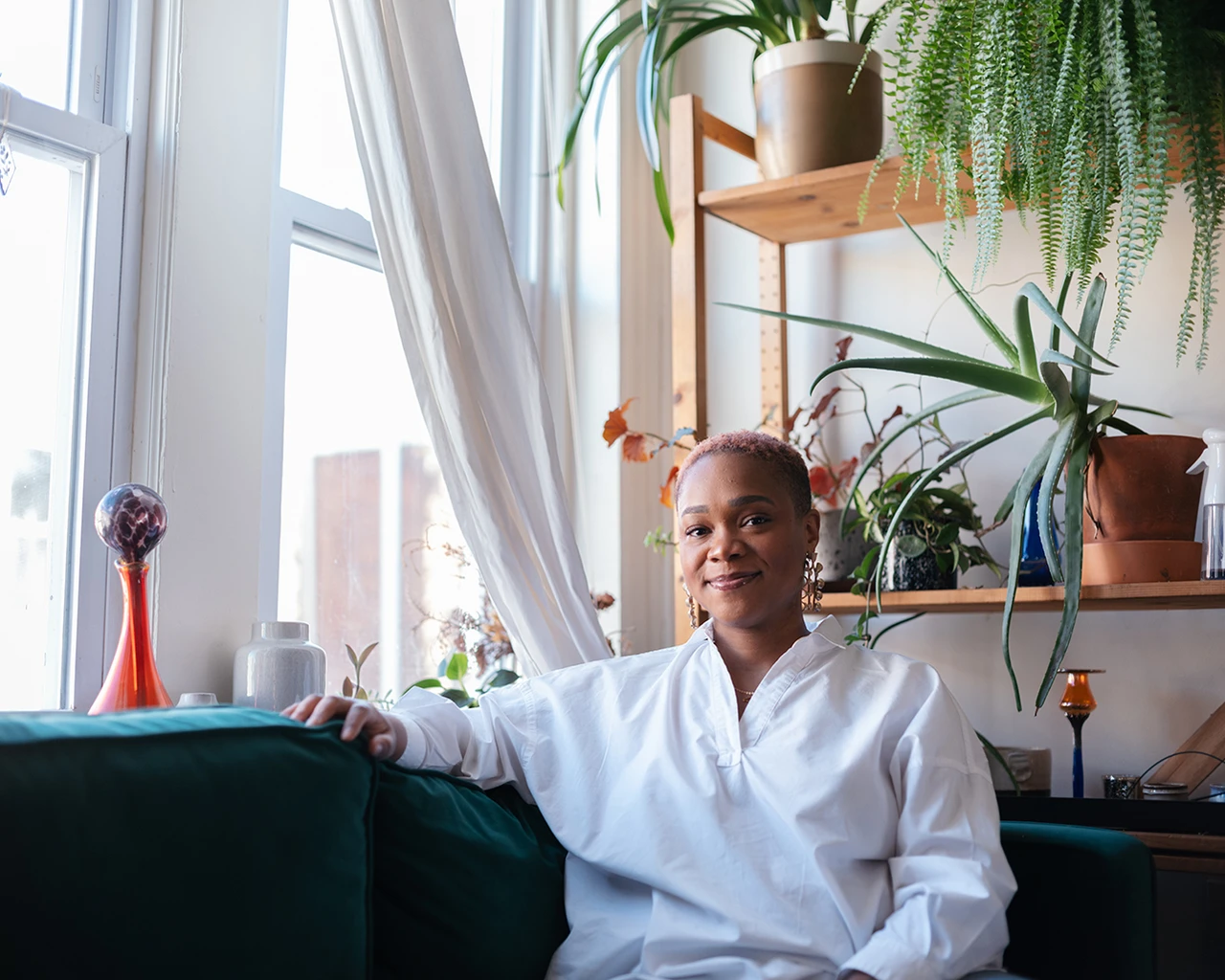
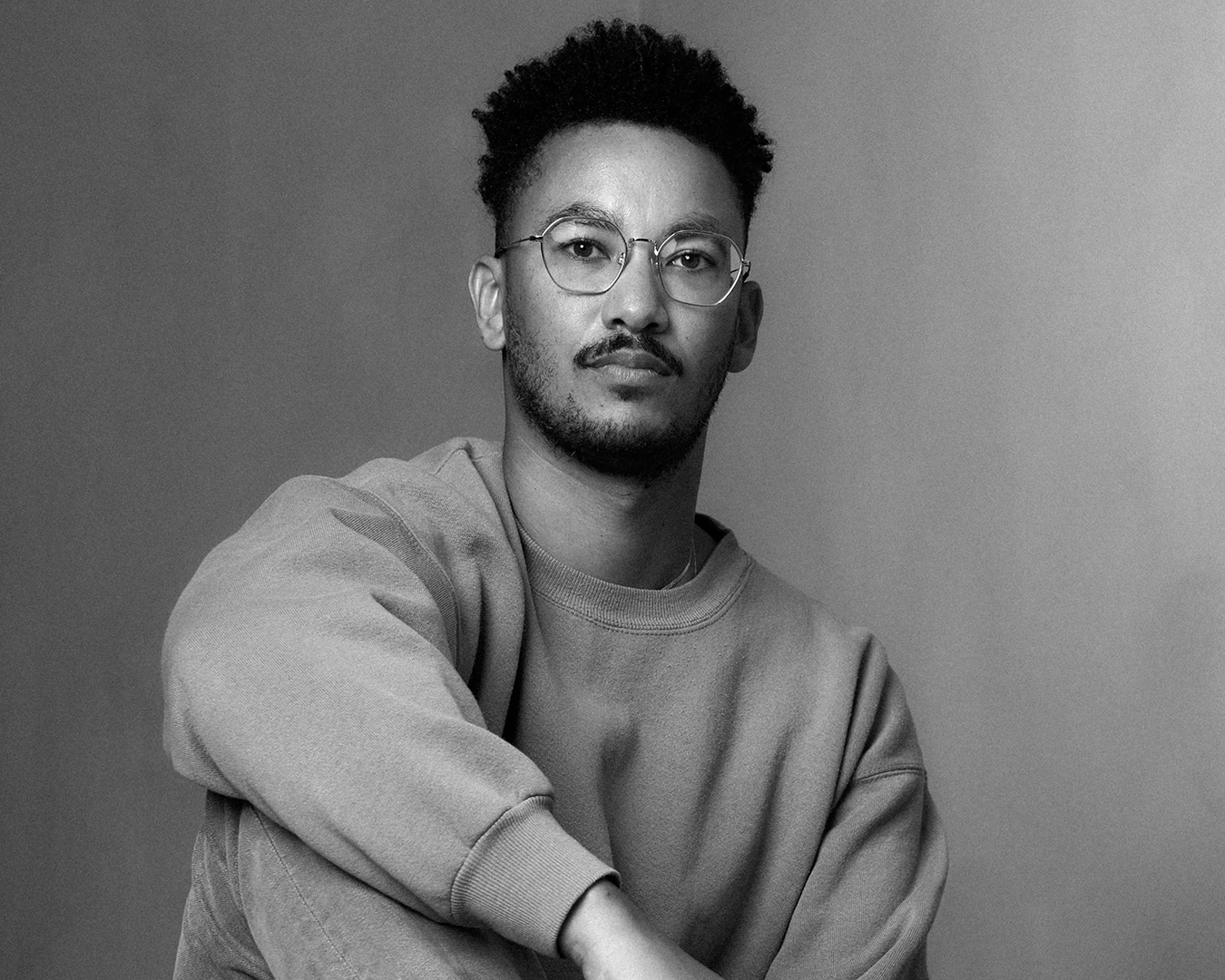
Tshay, 2024 Pew Fellow. Photo by David Evan McDowell.
What does being an artist mean to you, versus what people think being an artist looks like?
It may appear, especially online, that artists are always aware of what their work is doing. But sometimes I don’t understand my work in full, even when I’m aware of my intention or entry point. So much of my process is about following my line of inquiry down a rabbit hole, and the art itself begins to operate as evidence of that exploration.
I took one formal photography class in college in which I created a series of portraits for my final project. When it was time for the crit, I received feedback, not on the photographs, but on the blurb I’d written to accompany them. My professor told me very plainly that my statement was not representative of the work at all. It’s not that I didn’t understand what I was doing, but I couldn’t pick up on the themes coming across in the work. I didn’t know how to contextualize the series beyond my intention for it.
I think it’s probably important for artists to not understand completely what we are making. We need that little bit of a mystery.