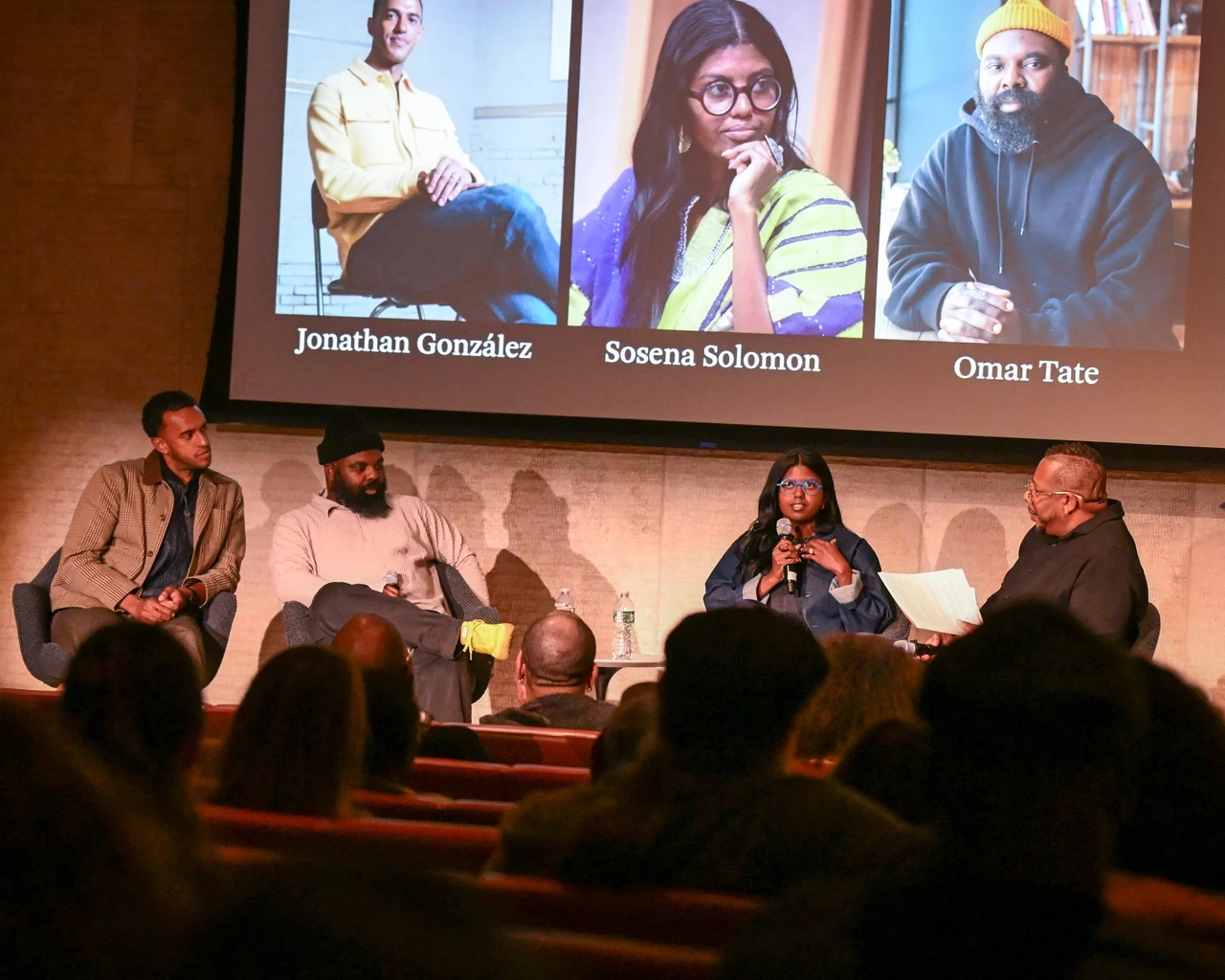
Three Pew Fellows working across dance, visual art, film, and food convened Tuesday evening, October 6, to discuss the role of memory and preservation in their creative practices during the first installment of On Practice: Pew Fellows in Conversation.
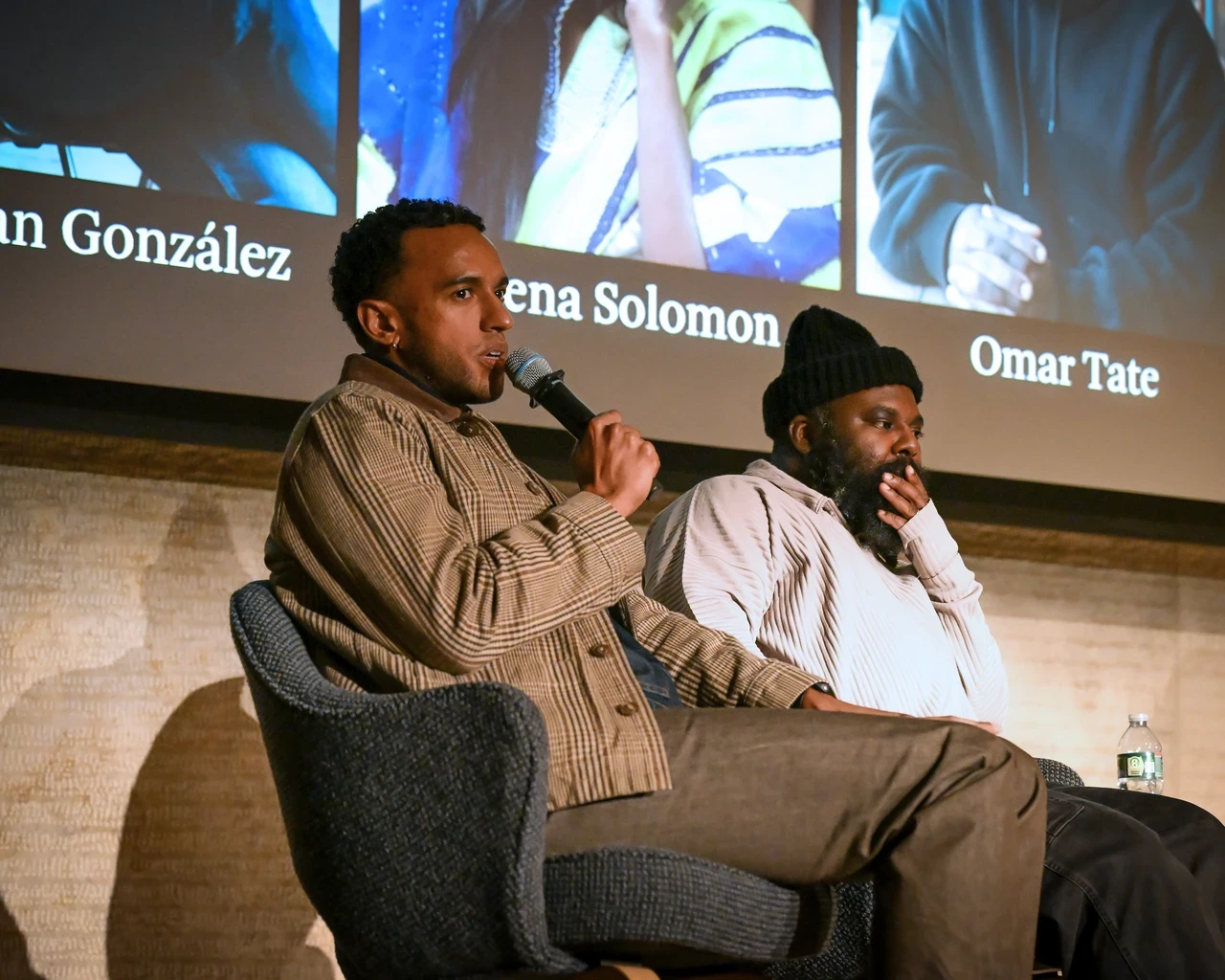
The event series, presented by The Pew Center for Arts & Heritage in partnership with the Barnes Foundation, brings together the 2025 Pew Fellows in the Arts for candid conversations about the questions behind their work. Tuesday's talk at the Barnes featured choreographer and artist Jonathan González, filmmaker and multimedia visual artist Sosena Solomon, and visual artist and chef Omar Tate.
Register for our next event on November 11 here.
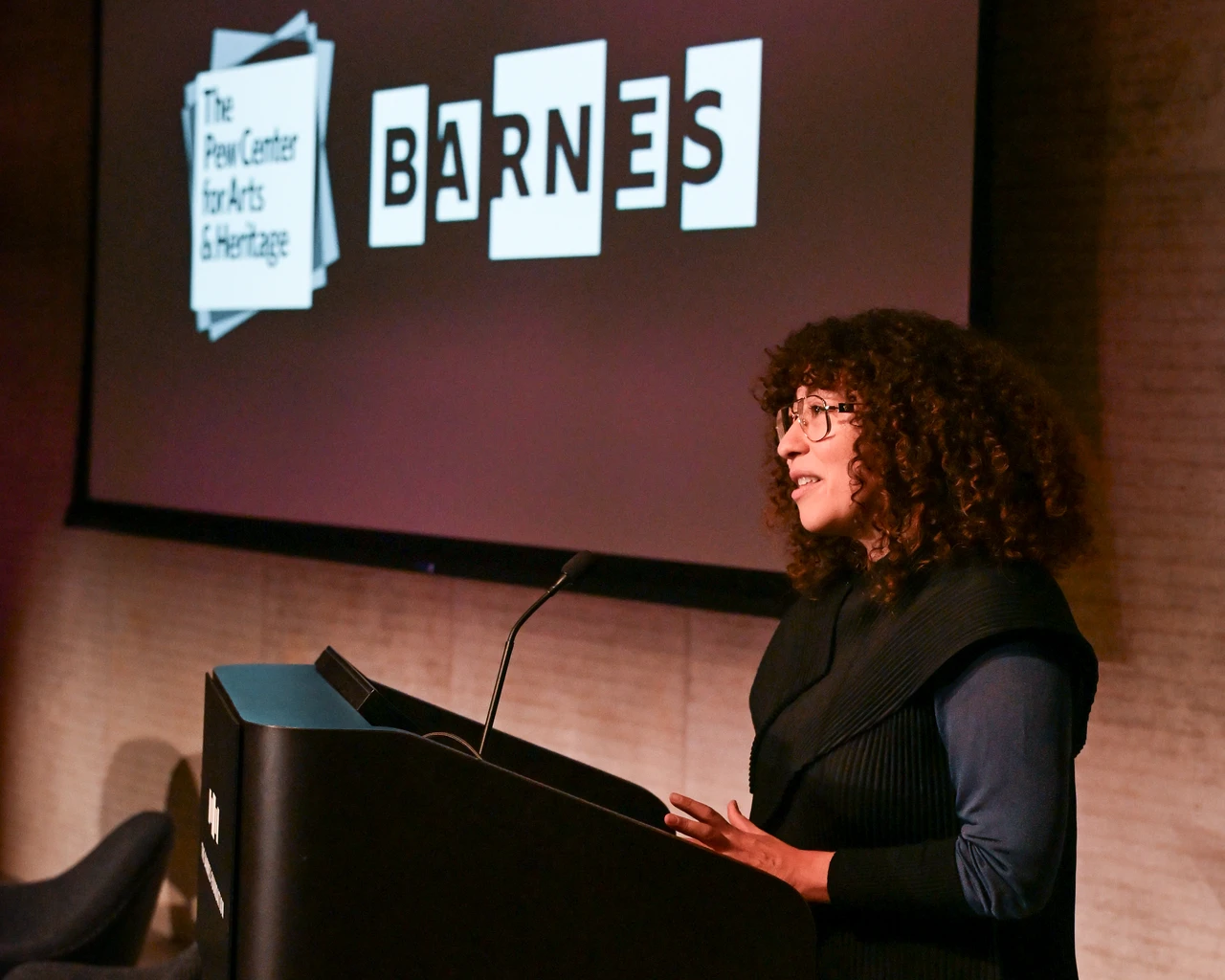
"We're thrilled to work with the Barnes on programs like this that offer a window into the work and creative lives of some of our city's most extraordinary artists," the Center's Executive Director, Christina Vassallo, told the audience. "Beyond our role as a funder supporting artists and cultural organizations across the greater Philadelphia region, the Center has a long-standing commitment to creating opportunities for knowledge-sharing. Tonight's event is an extension of that work and connects with the Barnes' mission to make the arts accessible to all."
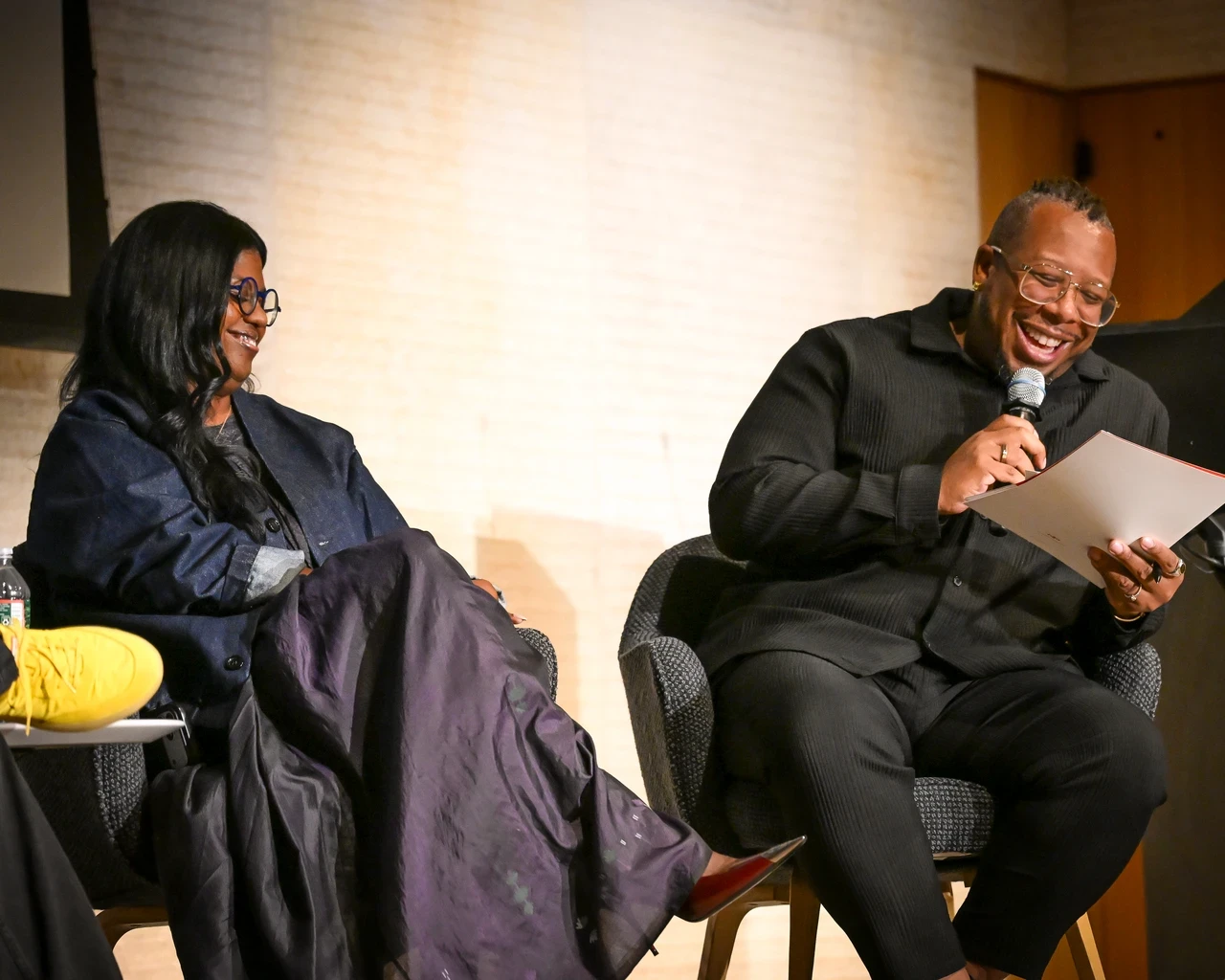
James Claiborne, the Barnes' Fleischner Family Vice President for Engagement, moderated the conversation, drawing on the artists’ diversity of mediums and the ways in which their practices converge and diverge around preservation, ritual, and considerations of physical space.
One common thread among the artists is a focus on cultural history and memory: Tate's work at his restaurant, Honeysuckle, connects Black cuisine and creative lineages; Solomon's films document the legacy of cultural spaces on the verge of transition; and González's durational performance pieces are informed by Black cultural narratives.
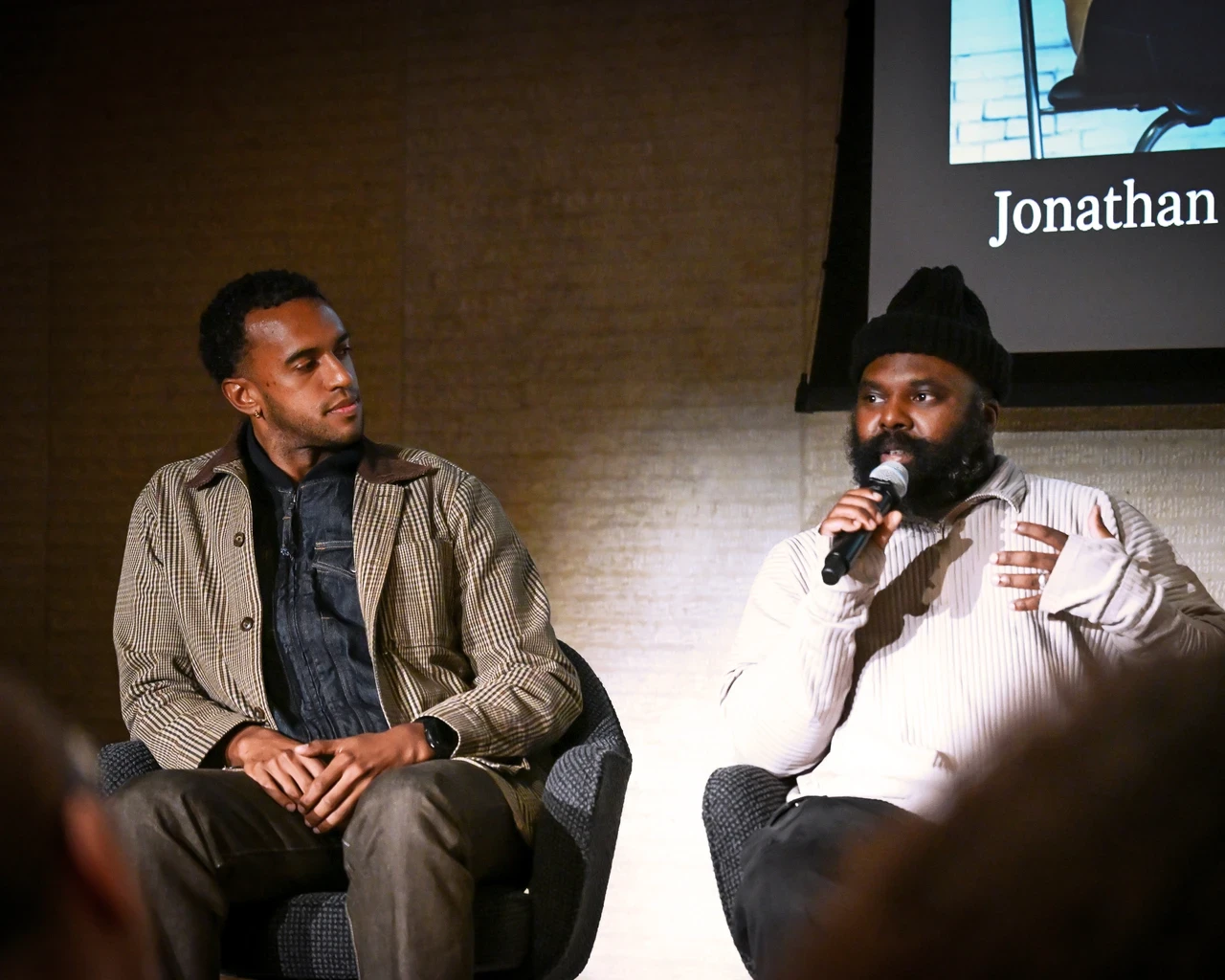
Tate spoke about creating experiential connections to cultural memory through food. "What's preservation if you can't share it? What's a pickle in a jar if no one ever tastes it?" he asked. "I feel that way about our history, I feel that way about where we might be going. We utilize that space [Honeysuckle] in the same way that an institute such as the Barnes or the Library is able to utilize the materials in their space—to share information. The only difference is, we hope you don't forget it because there is a taste lingering on your tongue."
Ritual and ceremony also play into each artist's work. Solomon spoke about MERKATO, her 2014 film installation at the Ethiopian Community Association in West Philadelphia, which began by inviting visitors to be part of a coffee ceremony.
"Ritual comes in many forms," Solomon said. "It's spiritual, it's mundane, it's how we live our lives. I think, especially in these three-dimensional opportunities to connect with audiences, that it's more than just a screen, it's more than just a film, it's more than just a food to eat. It becomes an act of convening with each other."
Making these connections through physical space is key to González's practice. They often create work for nontraditional stages, from historic homes to botanical gardens and cemeteries, and said they operate with a principle that there is always “life in the air."
"It's impossible to make a dance and step into a room and imagine there's not all this life inside of here," González said. "So when I work with my performers, I'm always like, 'The space is not yours for the taking. When you're walking through space, imagine it filled with all that life you can't see.'"
Video from the panel will be released on the Center website in the coming months. The next installment of On Practice takes place on Wednesday, November 11, and features performance artist and director Rose Jarboe, multidisciplinary artist José Ortiz-Pagán, and visual artist George Rodriguez discussing community-engaged creative practices. Register for the free talk here.