Pew Fellow and Multidisciplinary Artist Mikel Patrick Avery on Crafting Tools for Creativity
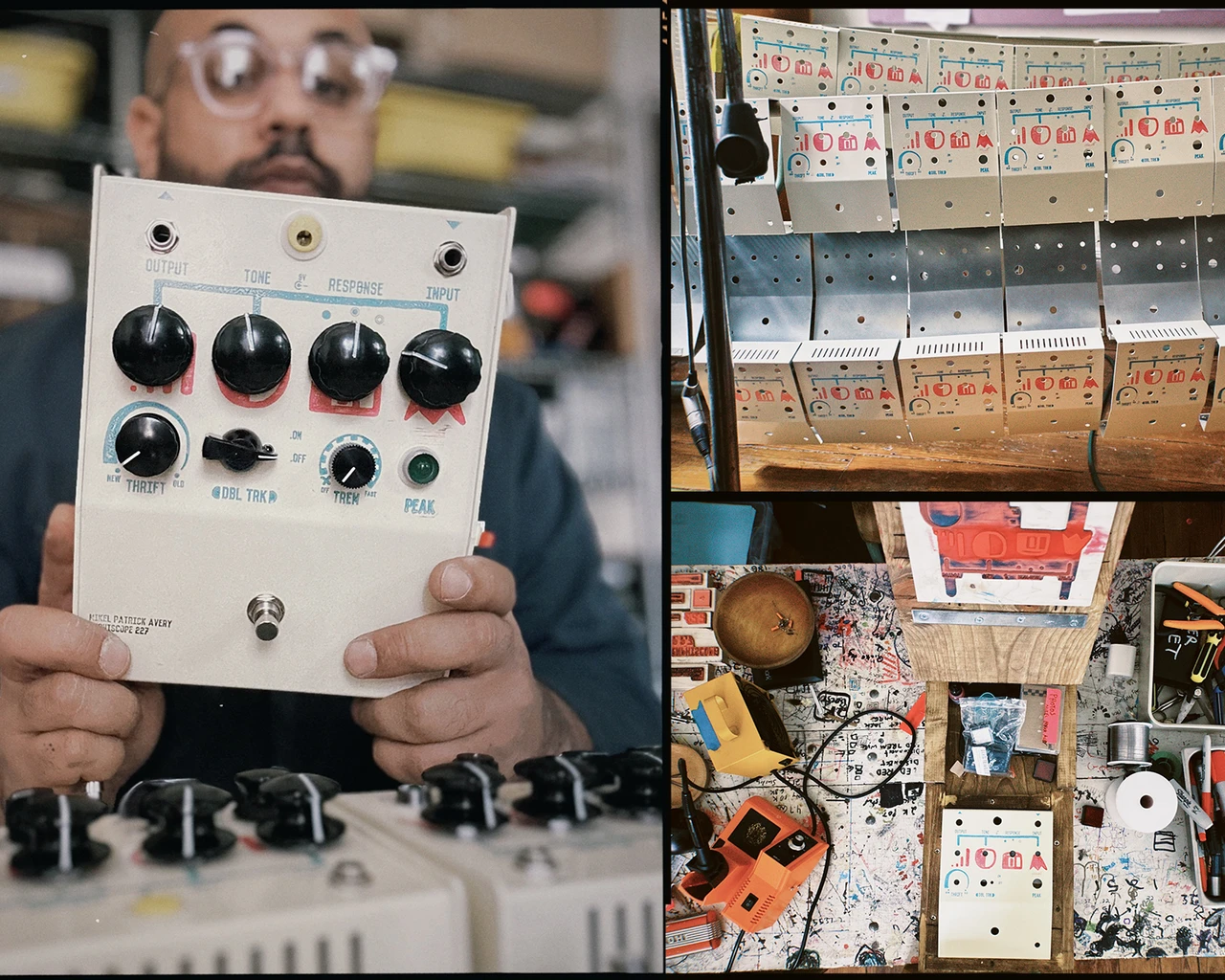
Pew Fellow Mikel Patrick Avery is a composer and multidisciplinary artist whose creative work spans jazz, electronic, and improvised music, as well as film, photography, painting, and other disciplines. Currently, he drums in the avant-garde trio BASIC, featuring guitarist and Pew Fellow Chris Forsyth, which released its self-titled sophomore album in June of 2026. He also designs instruments and effects modules: In 2025, he launched a bespoke custom effects pedal for musicians and sound artists called the EMPHISCOPE 227, which he sells through his website.
Avery spoke with us about being both a maker of art and a maker of tools for art. He shared his reflections on artists as leaders and the things that keep him inspired creatively.
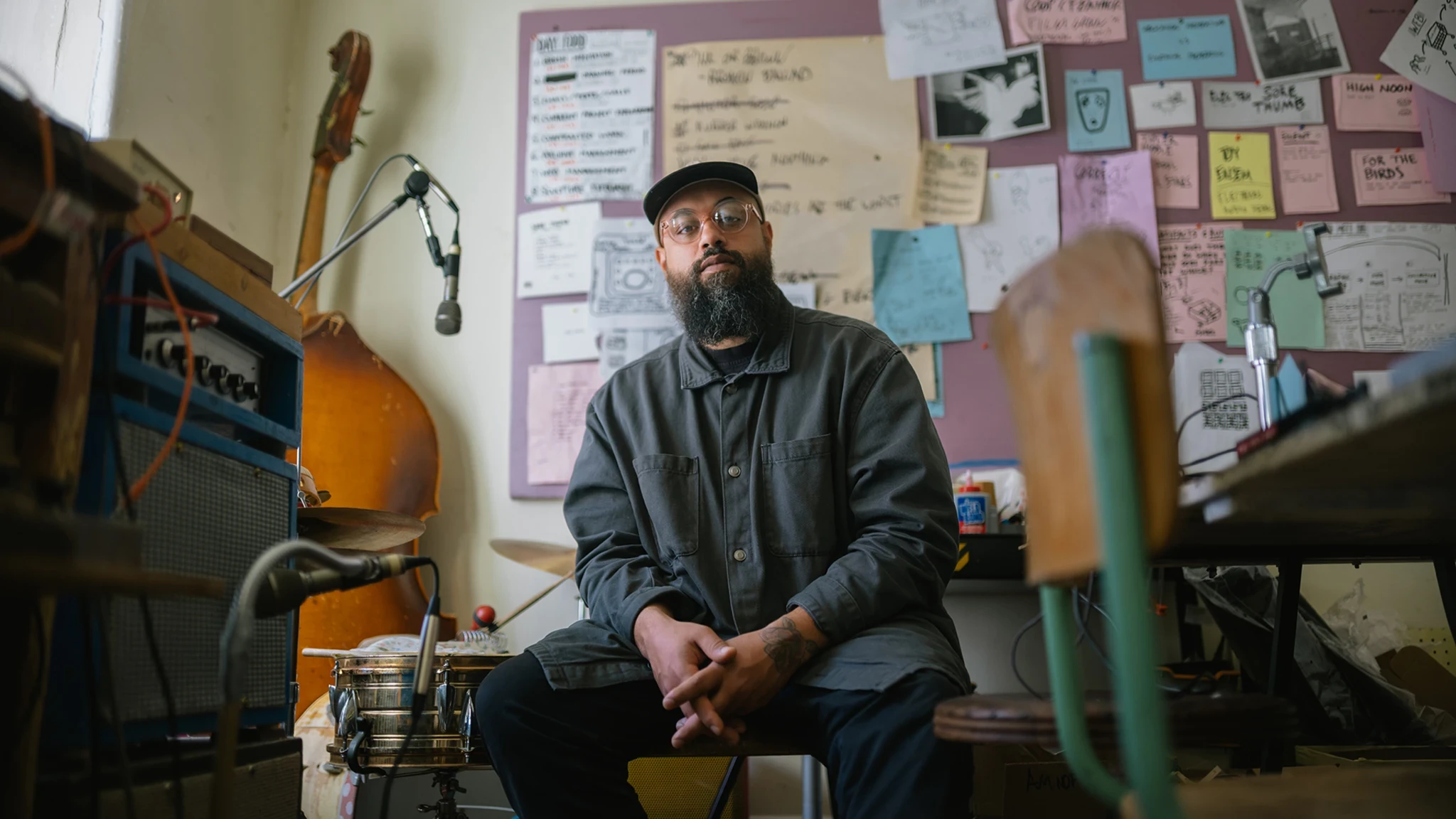
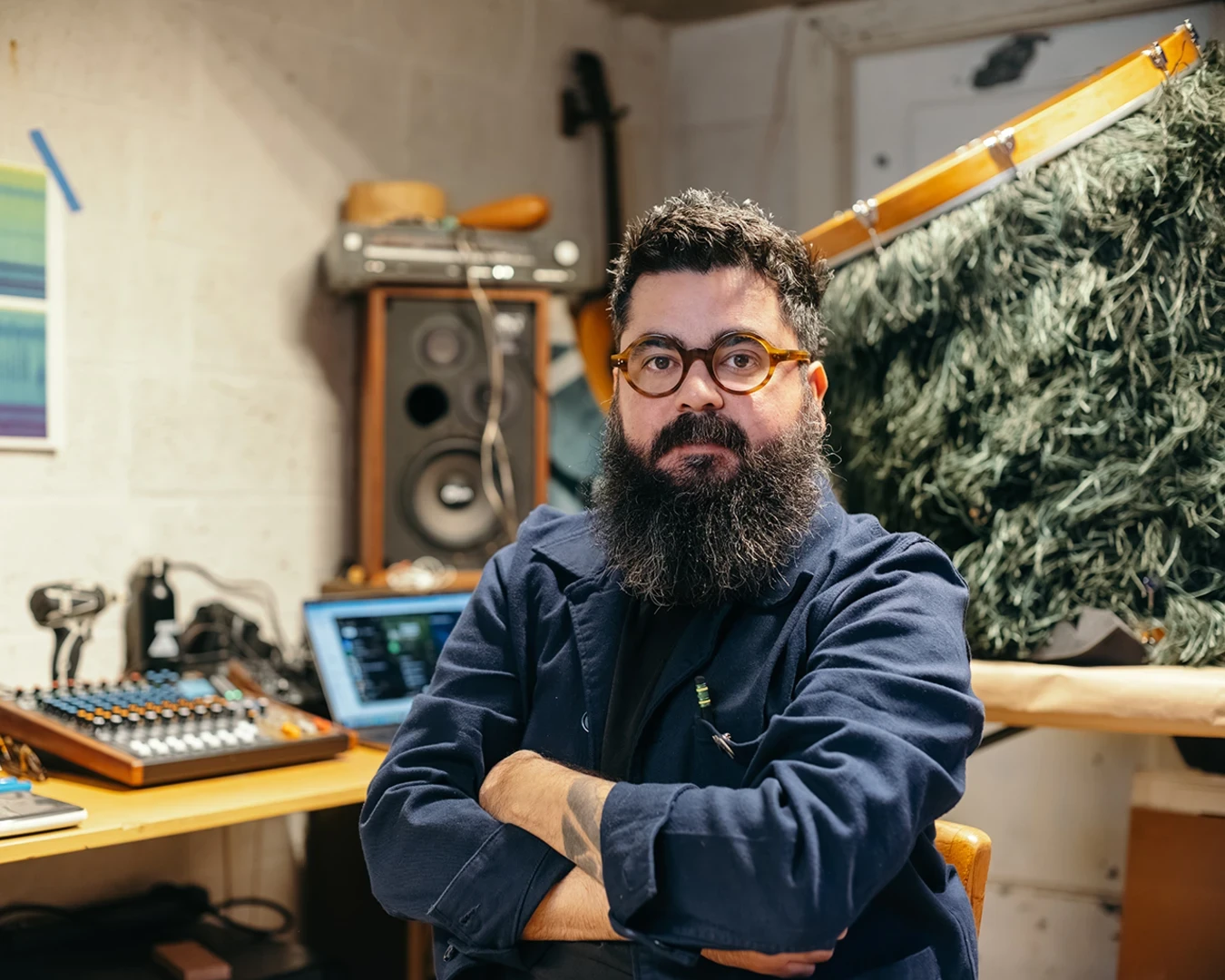
Mikel Patrick Avery, 2024 Pew Fellow. Photo by David Evan McDowell.
A recent part of your practice has been designing tools for creativity, specifically effects pedals. How do you approach making a tool that does not yet exist? Are you basing it on your own needs as a performer and composer, or the needs of your peers?
I like junk. I’m an avid thrifter. I love janky old audio gear and using things in ways they were not intended: broadcast consoles, projectors, old karaoke machines, Radio Shack mixers. Using these things can work for me at home or in my studio, but it's not so convenient or reliable [elsewhere], especially on the road.
I wanted to make something that felt adjacent to the thrifted things I love. The challenge was to make something that was of a similar ethos of a pawn shop find that could also serve within the different playing situations folks find themselves in.
When it comes to design, it’s about making what you can’t find, that it solves some type of problem. This could be in sound, or form; more often than not, it’s both. For myself, a good starting point is to acknowledge the need first, recognize the problem, do the research, and discover alternate creative options for yourself. Hopefully the result is something that A. works, B. doesn’t suck, and C. can be of use for someone else.
"When it comes to design, it’s about making what you can’t find, that it solves some type of problem. This could be in sound, or form; more often than not, it’s both."
For a project like the EMPHISCOPE 227 effects pedal, what do you seek in collaborators, like your cohort of beta testers (which includes your bandmate and Pew Fellow Chris Forsyth): a shared sensibility? An array of perspectives?
I’m very lucky that my friends can endure my neuroticism. I’d consider myself a full immersionist and once I get going, it’s difficult for me to stop. That’s the time to step back and get some fresh input: counterintuitive layouts, misspellings, things that your friends and community around you can shed light on.
Having people you can trust is paramount: friends that challenge you and push your ideas, people that can visualize that last 20% you need to go and offer guidance. This is especially important when you’re teaching yourself how to do things. I’m very grateful for the people around me willing to try things out and offer feedback.
It’s important to ask yourself, "Is it succeeding in the way you expected?" And almost more importantly, "Is it falling short the way you expected?" Not everything can be everything, and being aware of what something can do is just as important as an awareness of what it can’t. I’m really talking much more than just effect pedals; that's everything.
Pew Fellow Mikel Patrick Avery assembling his effects pedal EMPHISCOPE 227. Photos courtesy of Mikel Patrick Avery.
What does being an artist mean to you?
I believe most people feel like they have more to offer to the world than the world is allowing them to share. Our own minds can even get in our way of becoming our best self. Constantly reinforcing the value of risk taking [is crucial]; without risk, it’s not worth doing.
When you work in forms of expression, and that expression becomes fully realized, you feel more a part of the world around you. That’s a beautiful thing.
What is driving you to create at this moment?
Explorations. I have an unhealthy relationship with finding, discovering, learning. I’m completely obsessed and out of balance at the moment. I’m working to get better at that.
I’m always aiming to challenge myself to a fault with a heavy lean into the autodidactic. Learning as you go can be a much longer road that also requires the embracing of mistakes as part of the creative process, mistakes that act as a launching point into something you otherwise would have never found. Improvisatory by nature, leading to discovery that was sitting there in plain sight.
Artists are so often ahead of the culture and give us new ways of seeing the world. How do you think artists are leaders?
The questions that artists propose and the methods in which they present are necessary for us to challenge our ways of thought: reconfiguring and rearranging preexisting ideas to shed light and create space in ways we didn’t know existed. This space allows new ways of thought, different avenues, new mindsets.
It doesn’t always have to make sense for others; if nobody’s digging what you’re doing, you’re either on to something or you’re on to nothing. You just have to keep going and don’t stop until you find out for yourself.